REVIEW · HONOLULU
Hawaii Volcanoes National Park Experience From the Big Island
Book on Viator →Operated by Aloha Sunshine Tours · Bookable on Viator
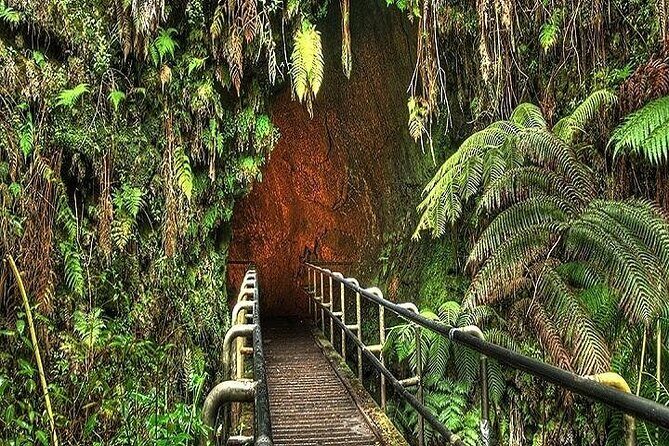
That first lava-tube walk is a mind reset. I like that Hawaii Volcanoes National Park admission is built in, and I also like the round-trip transfers that keep your day from turning into an Uber hunt. One thing to keep in mind: the schedule is tight, so the park and beach are shown in a highlight style rather than a long wander.
This is set up as a true day trip with narration in the van, plus stops that break up the driving. You might get guides like Mel or Henry (both described as strong on Big Island stories and science), and the max group size stays small enough for questions without constant shuffling.
It’s also a long day at elevation and along a working volcanic area, so pack for temperature swings. Bring layers, closed-toe shoes, and a rain layer—your comfort matters more than you think when you’re standing around vents or walking uneven lava.
In This Review
- Key things to know before you go
- A Full Big Island Day: Coffee, Black Sand, and Volcano Stops
- Price and Value: What $139 Covers (and Why It Matters)
- Greenwell Farms on Mauna Loa Slopes: Coffee You Can Actually Taste
- Manuka State Wayside Park: A 2-Mile Nature Trail Without the Crowd Feel
- Punaluʻu Bake Shop: Lunch, Sweet Bread, and a Convenient Stop
- Punaluʻu Black Sand Beach: Sea Turtles, Short Walk, Big Atmosphere
- Hawaii Volcanoes National Park: Halemaʻumaʻu, Kīlauea Iki, Lava Tube, Steam Vents
- Mauna Kea Access Road, Kohala Coast, and Hilo: The Drive Adds Context
- Tour Logistics That Affect Your Comfort: Van Size, Timing, and What to Pack
- When the Guide Makes It: Mel, Henry, Brandon, and Jim-Style Storytelling
- Should You Book This Volcanoes Tour From Kona?
- FAQ
- What time does the tour start?
- Where do I meet if I’m flying into Kona International Airport?
- Is admission to Hawaii Volcanoes National Park included?
- Are meals included in the price?
- Does the tour include pickup and drop-off?
- How long is the Hawaii Volcanoes National Park part?
- What should I bring for the park and drives?
- What if weather is bad?
- Is there any limit on group size?
Key things to know before you go
- Volcanoes National Park entry included so you don’t worry about fees at the gate
- Hotel/area pickup and drop-off makes the day trip actually feel like a day trip
- Snacks provided, plus a main lunch break at Punaluʻu Bake Shop
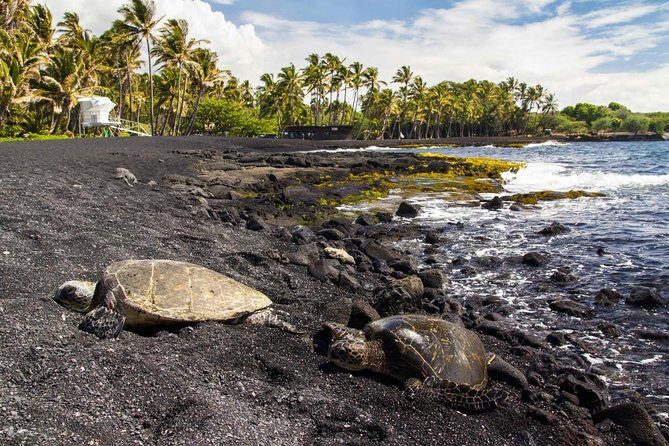
- Black sand beach stop with a chance to see native green sea turtles
- Small group size (max 22) keeps the experience interactive
- Plan for cool, wet, and low cell signal in the park and higher-elevation stops
A Full Big Island Day: Coffee, Black Sand, and Volcano Stops
This tour is built around one big theme: volcano country, with a few strategically placed breaks so the day doesn’t feel like nonstop road time. You start early (8:00am) and then you work through a sequence of Big Island “flavor” stops—coffee, a nature walk, sweet bread, and a black sand beach—before hitting Hawaii Volcanoes National Park for the main event.
The best part is the pacing of variety. You’re not only stuck at one attraction. You get a coffee farm that helps explain Kona agriculture, then a forest trail that shows how different Mauna Loa slopes can feel, then a seaside stop that’s simple and beautiful, and finally the park where the ground is still doing its thing.
Two reality checks: first, this is a guided highlights plan, not a self-paced road trip. Second, volcano views can change fast. If conditions hide the dramatic stuff (weather, timing, volcanic gas), you still learn the area’s story and get into the places that make the park special.
You can also read our reviews of more tours and experiences in Honolulu.


Price and Value: What $139 Covers (and Why It Matters)
At $139 per person, the deal is less about one attraction and more about removing hassle. What’s included is the stuff that usually adds up: Hawaii Volcanoes National Park admission, air-conditioned round-trip transfers, and a local guide with narration. That combo is especially valuable on the Big Island, where distances are real and parking lines can eat your time.
You’ll also get snacks, which sounds minor until you’re on a long day with gaps between meals. Meals are not included, but you do stop for lunch at Punaluʻu Bake Shop, where you can choose from options like sourdough sandwiches, Kalbi beef, and Hawaiian plate lunches. That lunch stop is often where the tour either feels generous or feels rushed—so it helps that the menu includes lots of choices and baked goods.
If you’re on a budget, the biggest value is knowing the park entry is already handled. If you’re not on a budget, the value is still there because you’re paying for an organized day: pick-up, narration, and a plan that hits multiple zones without needing your own transport.
Greenwell Farms on Mauna Loa Slopes: Coffee You Can Actually Taste
Greenwell Farms is the Kona-region coffee stop on this route. The farm dates back to 1850 and is known for being one of the older coffee operations in Hawaii. The guide story typically connects the dots: volcanic soil, specific rainfall patterns, and how that mix shaped Kona coffee into something people recognize worldwide.
What you’ll do here is simple. You’re not signing up for a full coffee-nerd seminar; you’re getting a quick, grounded stop to see and understand the setting. Expect around 30 minutes. The farm ticket is listed as free in this tour plan, which is helpful if you want to keep costs predictable.
A practical note: one person described not even seeing the coffee plant during their stop, so don’t assume this time slot will function like a long walk-through. If coffee is a top priority for you, arrive with flexible expectations, and lean on your guide for context.
Manuka State Wayside Park: A 2-Mile Nature Trail Without the Crowd Feel
Next up is a quieter pause at Manuka State Wayside Park, a 13-acre park along the Hawaii Belt Road (Highway 11). It’s known for having both wet and dry forest ecosystems, which means the trail can feel like it changes character as you walk.
Your itinerary calls for 30 minutes, and it specifically mentions the 2-mile Manuka Nature Trail. That’s not a huge hike, but it’s long enough to stretch your legs before the main driving grind and the volcano park walk.
This stop is valuable because it adds ecology to the day. Volcanoes are about geology, sure—but the Big Island is also about how plants and birds adapt to it. You’ll see interpretive signs along the trail and you may encounter native plants and wildlife like endemic birds (including Hawaiian hawk and honeycreeper, where conditions allow).
Consideration: this part can feel a little “walk-and-read” rather than “wow-and-snap.” If you’re chasing only dramatic sights, this might feel slower than the black sand and crater parts. Still, it’s one of the best “reset your brain” breaks in the whole plan.
Punaluʻu Bake Shop: Lunch, Sweet Bread, and a Convenient Stop
Punaluʻu Bake Shop is famous for being the southernmost bakery in the U.S., and it’s a real part of the local travel rhythm. What you’re really buying here is time that works: restrooms, seating options, baked goods, and a lunch choice you can actually customize.
The shop’s sweet bread flavors are the headline—taro, guava, and mango are specifically mentioned—plus you get the gift-shop side and a garden area to wander if your schedule allows.
Your tour gives about 30 minutes here, and the plan also notes you stop for lunch at Punaluʻu Bake Shop. That’s a key detail: if you’re hoping to maximize time in the park, check your own tolerance for a food stop. One couple said they wished there was more time walking the park or the beach instead of a longer break to eat, so treat this as the flexible chunk of the day.
Pro tip: bring a little cash if you’re planning to buy snacks or souvenirs beyond what you packed. Cash-only roadside stands and local shops are common on parts of the route.



Punaluʻu Black Sand Beach: Sea Turtles, Short Walk, Big Atmosphere
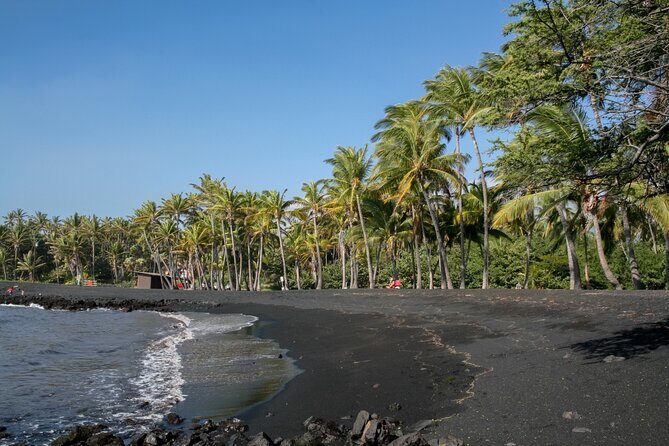
Then comes the black sand beach stop at Punaluʻu, with about 30 minutes. This is one of those short stops that can still feel like a highlight because the environment does the work for you.
The main expectation is a chance to see native green sea turtles. You won’t control animal behavior, of course, but the beach is the kind of place where even if you don’t spot one instantly, you still get the dramatic contrast: dark sand, ocean air, and a setting that feels unmistakably Hawaiian.
Drawback to plan for: with only half an hour, it’s not the time for a slow, long beach stroll. It’s more like walk a bit, look carefully, take a few photos, then move on. If you’re the type who loves lingering, you’ll feel the time pressure here.
Hawaii Volcanoes National Park: Halemaʻumaʻu, Kīlauea Iki, Lava Tube, Steam Vents

This is the reason you book. The park stop runs about 2 hours and includes multiple key stops designed to explain the area’s volcanic personality: craters, rain-forest-like contrast, and geothermal activity you can feel in the air.
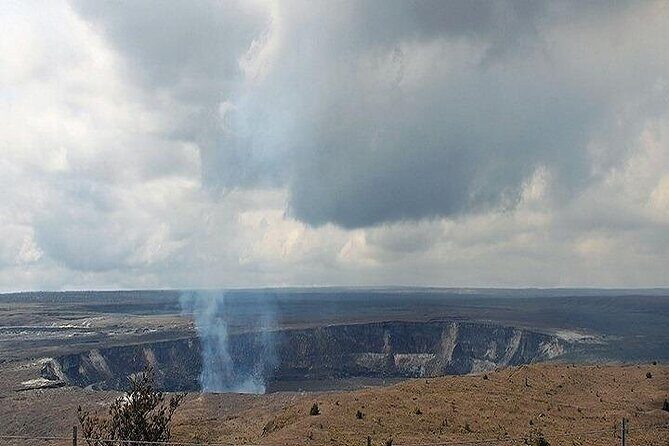
You start at the visitor center for orientation—geology and history help your eyes work better when you’re looking at craters and lava features. Then it’s on to Halemaʻumaʻu Crater, where the tour specifically calls out the awe-inspiring glow of molten lava. Here’s the thing: the glow isn’t guaranteed. It depends on conditions and timing, and one person in the feedback said they didn’t see molten lava at all. So treat this as a possible wow moment, not a promise.
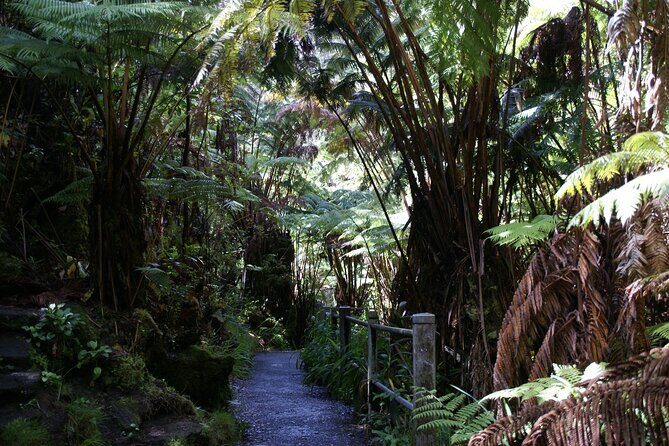
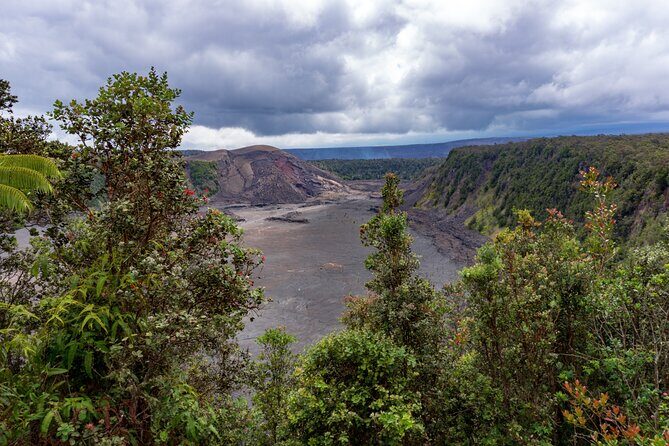
Next is the Kīlauea Iki Rainforest Lookout. This is a contrast stop: views over lush growth around a massive crater area, with a trail through remnants of a past eruption. It’s the “volcano isn’t only rock” part of the lesson.
After that, you walk the Thurston Lava Tube. This is a real, physical change from the open air: you go into a natural tunnel formed by flowing lava. It makes the idea of moving molten rock feel less abstract.
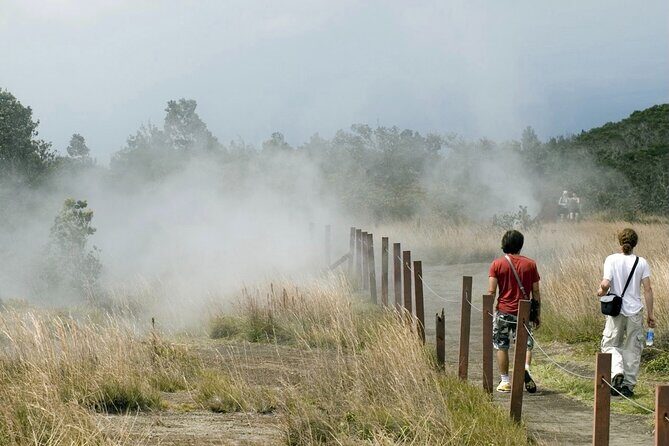
Finally, the tour includes active steam vents. If you’re sensitive to smells, this is important: volcanic gases (like sulfur dioxide) can be an issue, especially for people with respiratory conditions such as asthma. Even if you’re not sensitive, pay attention to your body and follow guide instructions and marked trail rules.
Practical reality: cell service is limited or nonexistent in many parts of the park. Download any maps you like beforehand, and don’t rely on your phone to guide you once you’re inside the main area.
Mauna Kea Access Road, Kohala Coast, and Hilo: The Drive Adds Context
Beyond the named tour “stops,” the route notes point to additional Big Island scenery. The tour information includes Mauna Kea Access Road, Kohala Coast, and Hilo highlights.
Mauna Kea Access Road is described as a steep, winding route toward the summit area, with changing climates as you climb. Even without reaching the top, the takeaway for you is that temperatures can drop fast and the air gets thinner. The tour also specifically warns about quick weather changes at higher elevations.
Kohala Coast is framed as a drier side of the island, known for beaches, luxury resorts, and scenic viewpoints. It’s not sold here as a long beach day. It’s more about giving you a sense of how the island’s weather changes by region.
Hilo is included as part of the town-and-culture slice of the day. The route notes mention places like the Lyman Museum, the Hilo Historic District, and the Pacific Tsunami Museum, plus Liliuokalani Gardens and the Hilo Farmers Market as a lively local stop. Even if you only see portions of these areas from a drive-by, it adds meaning to the volcanic story: geology shapes people, and people build culture around that reality.
If your day feels like it’s mostly driving between stops, you’ll still get value from it. These “context” segments help the main park visit make more sense.
Tour Logistics That Affect Your Comfort: Van Size, Timing, and What to Pack
This is a “smallish group” tour with a maximum of 22 travelers. That matters because it keeps questions possible and reduces the feeling of being one number in a crowd. That said, one family mentioned the van felt cramped and suggested fewer people for better legroom. If you’re tall or you hate tight seating, it’s smart to choose a spot near the aisle when possible and bring a water bottle you can hold without wrestling your bag.
Timing: Start is 8:00am and the day runs about 8 to 10 hours. It’s long. The upside is you cover a lot in one shot—coffee, forest, beach, and park. The downside is you won’t get to slow-walk everything.
Most people should be able to participate, but you’ll want sturdy shoes. The park terrain can be uneven and sharp volcanic ground is a real possibility. Flip-flops and sandals aren’t a good idea here. Wear closed-toe shoes and plan to walk at a moderate pace, even if the stops are short.
What to pack based on the tour guidance:
- Layers and a rain jacket (weather shifts fast)
- Water and sunscreen
- A hat
- Cash, since some roadside stops can be cash-only
- Any respiratory protection you need, and extra caution if you’re sensitive to sulfur smells
Also remember: volcanic areas require attention to hazards. Stick to marked trails and follow safety guidance. And do respect sacred sites—don’t disturb or remove anything.
When the Guide Makes It: Mel, Henry, Brandon, and Jim-Style Storytelling
A lot of the value here is the narration. People described guides like Mel and Henry as strong on Big Island history, geology, botany, folklore, and even music. Brandon was noted as both entertaining and informative, with humor that kept the group engaged.
Even if you’re not chasing a science lesson, good storytelling changes how you experience the park. Instead of looking at vents as random steam, you start seeing them as part of an active system. Instead of walking a lava tube as a tunnel, you understand what it means that lava once flowed there and cooled into rock.
One audio caution: one person said they couldn’t hear the guide well on the van. If you’re hard of hearing or you know noise bothers you, sit where the guide’s voice carries best and don’t be shy about asking for clarity during stop transitions.
Should You Book This Volcanoes Tour From Kona?
I’d book this if you want one organized day that hits the Big Island’s signature places without planning. The included volcano admission and pickup/drop-off make it feel like a real package deal. The stop variety also helps: coffee and forests keep the day from becoming one long “rock and steam” hour.
I’d think twice if you’re the type who needs lots of free time to wander. With a 2-hour park plan and a short beach window, you’ll be moving. If you’re hoping for deep self-guided exploration, you’ll likely want to pair this with a separate day of flexible time later.
I’d also use a simple filter: if you have respiratory issues, take the volcanic gas warnings seriously. If you know you’re sensitive, talk to your doctor and bring what you need—then follow the guide’s instructions closely.
If you’re going for the “Big Island highlights, guided well, no logistics headache,” this is a strong fit.
FAQ
What time does the tour start?
It starts at 8:00am.
Where do I meet if I’m flying into Kona International Airport?
Meet in the lot behind Alaska Baggage claim B-2.
Is admission to Hawaii Volcanoes National Park included?
Yes. Hawaii Volcanoes National Park admission fees are included.
Are meals included in the price?
Meals are at your own expense. Lunch happens at Punaluʻu Bake Shop where you can buy food.
Does the tour include pickup and drop-off?
Yes. Pick-up and drop-off service is included, and the vehicle is air-conditioned.
How long is the Hawaii Volcanoes National Park part?
The Volcanoes National Park section is about 2 hours.
What should I bring for the park and drives?
Bring water, snacks, sunscreen, a hat, layers, and a rain jacket. Wear sturdy, closed-toe shoes.
What if weather is bad?
The experience requires good weather. If it’s canceled due to poor weather, you’ll be offered a different date or a full refund.
Is there any limit on group size?
Yes. The maximum group size is 22 travelers.