REVIEW · HONOLULU
Oahu to Big Island Volcanoes National Park Adventure Tour
Book on GetYourGuide →Operated by Dynamic Tour USA · Bookable on GetYourGuide
Big Island volcanoes feel like another planet. This one-day tour ties together Hawaii Volcanoes National Park plus classic Hilo-area stops so you can see a lot without doing the planning yourself. You’ll also get an organized driver-and-guide flow from Oahu to the Big Island, which is the real time-saver.
I like two parts in particular: the up-close focus on Kīlauea Iki Crater and the chance to pair it with roadside icons like Banyan Tree Drive. I also appreciate that park entry is included, so you spend less time figuring out paperwork and more time watching lava landscapes change with the light.
One thing to think about is logistics. In at least one case, a guest expected pickup and didn’t get it, then had to handle their own way to the airport; if you’re picky about smooth transfers, plan extra margin and be ready to get yourself to where you need to check in.
In This Review
- Key highlights worth your attention
- A One-Day Big Island Hit from Oahu: What You’re Really Buying
- Flying Over to Hilo: Timing, Transfers, and Staying Sane
- Banyan Tree Drive and Hilo Bay: Classic Stops with Real Stories
- Liliuokalani Gardens, Wailuku River State Park, and Rainbow Falls
- Richardson Black Sand Beach: The Only Black Sand Stop in the Hilo Area
- Entering Volcanoes National Park: Visitor Center to Steam Vents
- Kīlauea Iki Crater: Why This Stop Hits So Hard
- Chain of Craters Road and Mount Kīlauea: Moving Through the Action
- Ancient Lava Tube and Sulfur Banks: The Texture of Volcanic Life
- Food, Comfort, and What to Pack for a Volcano Day
- Price and Value: Is $580 Worth It?
- Who This Tour Suits Best (and Who Should Skip)
- Should You Book This Big Island Volcano Adventure?
- FAQ
- FAQ
- How long is the Oahu to Big Island Volcanoes National Park adventure tour?
- What is the price per person?
- Is park admission included?
- What are some of the main stops on the tour?
- Is lunch included?
- What’s included with the tour besides sightseeing?
- Do you get a live tour guide?
- What documents should I bring?
- How do I know when to board my flights?
- Is the tour suitable for people with mobility impairments?
Key highlights worth your attention
- Kīlauea Iki Crater: often described as the most active crater experience on earth in a single visit
- Guided Volcanoes National Park time: Visitor Center plus key viewpoints and stops, with admission included
- Ancient lava tube + steam vents: proof that Hawaiʻi’s “ground reality” is still moving
- Banyan Tree Drive names: you’ll spot trees planted by major historical figures, not just generic scenery
- Hilo-area waterfalls and black sand: Richardson Beach and Rainbow Falls add variety beyond volcanic rock
- English live guide: you’ll get context as you go, not just a drive-by photo stop
A One-Day Big Island Hit from Oahu: What You’re Really Buying
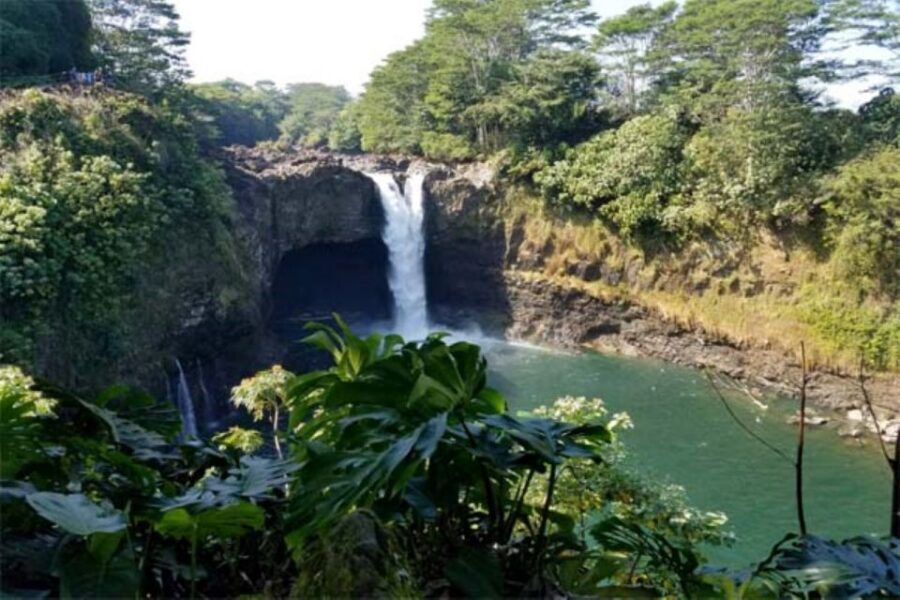
This is an all-in-one day designed to connect two worlds: Hilo-area coastal highlights and the volcanic core of Hawaiʻi Volcanoes National Park. The value of a tour like this is not just that you’re visiting famous places. It’s that someone strings the stops together in a logical order so your time on the ground feels efficient.
You’re also paying for organization. Flights are included, snacks and water are included, and the day is paced around major sites like the Visitor Center, Kīlauea Iki, steam vents, and the Chain of Craters Road corridor.
The most rewarding part for me is the contrast. You start with softer, greener (and often mistier) Hilo scenery like Rainbow Falls. Then the tour shifts into geology mode: sulfur banks, steam vents, and the thick, echoing feel of a lava tube. It’s a day that makes Hawaiʻi’s volcanic power easier to understand, not just easier to photograph.
You can also read our reviews of more tours and experiences in Honolulu.



Flying Over to Hilo: Timing, Transfers, and Staying Sane
Since this tour includes air travel, your day is tightly connected to flight times. After confirmation, you receive flight information, and you’re told to go to the airline check-in counter for boarding passes. The key timing points are clear: aim to be at the airport with boarding time 30 minutes before departure, and remember doors close 15 minutes before departure.
Here’s my practical advice: treat the “meeting point” as a place you can reach with confidence, not a place you hope someone finds you. One guest review noted a pickup problem and stress because nobody came. Even if that’s not your expectation, this tour involves enough moving parts that you’ll feel better if you build buffer time and keep your airport plan simple.
If you’re traveling from Oʻahu and your schedule is already full, double-check your ID and documents ahead of time. The tour asks for government-issued passport or ID, and it also requests you have your vaccine card with you to travel. Bring weather-appropriate clothing too; volcano regions can shift from sun to mist.
Banyan Tree Drive and Hilo Bay: Classic Stops with Real Stories
If you’ve only seen Hawaiʻi through beaches and resorts, Hilo’s roads can surprise you. This day includes Historic Banyan Drive, a scenic stretch where banyan trees are labeled with the names of famous people who planted them. The names you’ll see include President Theodore Roosevelt, Babe Ruth, and Richard Nixon.
That might sound like roadside trivia, but it adds a human layer. You’re not just staring at trees. You’re noticing how these icons ended up rooted in the landscape and still thrive as a thick canopy for walking and driving.
From there, you roll toward Hilo Bay, which is on the island’s eastern coast. Coastal stops help break up the heavier geology time later. They also give you a sense of where the volcano story connects to daily island life. And if you like gentle pacing, these bayside and city-adjacent stops feel more relaxed than the national park drives.
Liliuokalani Gardens, Wailuku River State Park, and Rainbow Falls
The itinerary balances “viewing” with “understanding.” At Liliʻuokalani Gardens, the story connects to a specific person: the gardens’ site was given by Queen Liliʻuokalani. This stop sits on the Waiakea Peninsula in Hilo Bay, so you often get both garden calm and a coastal backdrop.
Next comes water and legend. You’ll visit Wailuku River State Park, where the Tale of Hina comes to life. Even if you don’t know the story ahead of time, parks like this work because they’re not just about getting to a waterfall. They place nature inside culture, which helps you read the scenery in a fuller way.
Then there’s Rainbow Falls State Park. This is described as a waterfall with never-ending rainbows, which fits the classic Hilo weather pattern of mist and spray. I like this stop because it’s one of the easiest ways to shift your senses. After volcanic rock and sulfur later, Rainbow Falls is a reset button for the eye.
Richardson Black Sand Beach: The Only Black Sand Stop in the Hilo Area
When people think of black sand, they often picture the most famous beaches on the island. Here, your stop is Richardson Black Sand Beach, and it’s specifically called out as the only beach in the Hilo area with black sand.
That matters because it keeps the tour from repeating itself. You’re not just doing another coastline photo. You’re getting a distinct geological look—basalt sand created from volcanic activity—right alongside the more familiar tropical tones of Hilo.
If you’re the type who likes one “signature” stop, this is it. It also gives you a chance to stretch a bit and get outside before the national park takes over.



Entering Volcanoes National Park: Visitor Center to Steam Vents
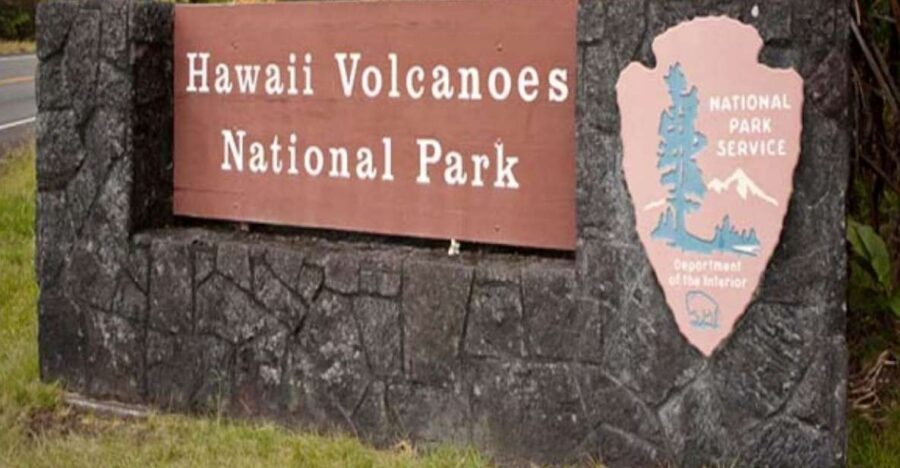
The heart of the day is your time inside Hawaii Volcanoes National Park. Entry is included, and the park was established in 1916. It’s the home base for two active volcanoes: Kīlauea and Mauna Loa.
The first stop you should care about is the Visitor Center. Even if you’re not the museum type, use it to orient yourself. On a one-day tour, orientation helps you connect what you’re seeing—crater edges, steam plumes, and volcanic rock shapes—to what those terms mean on the ground.
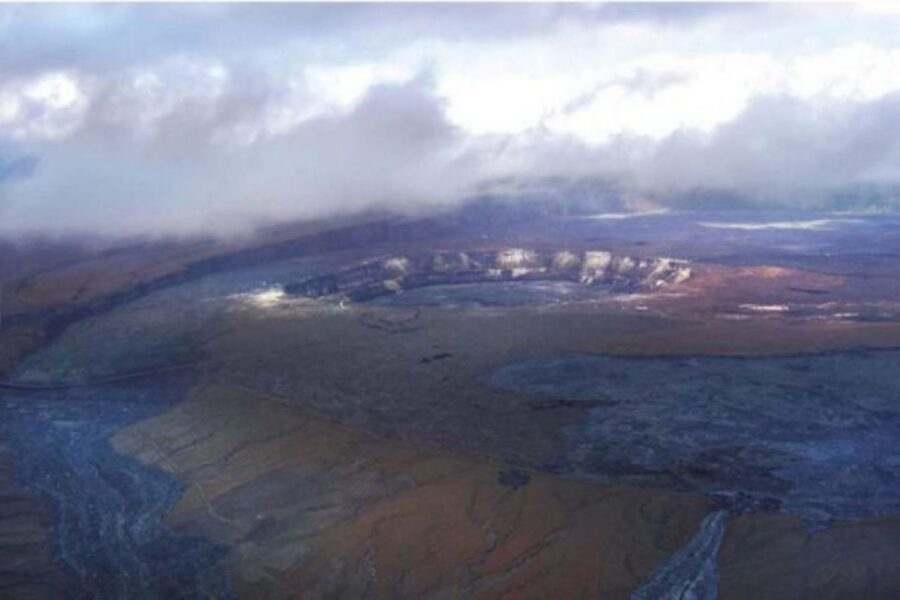
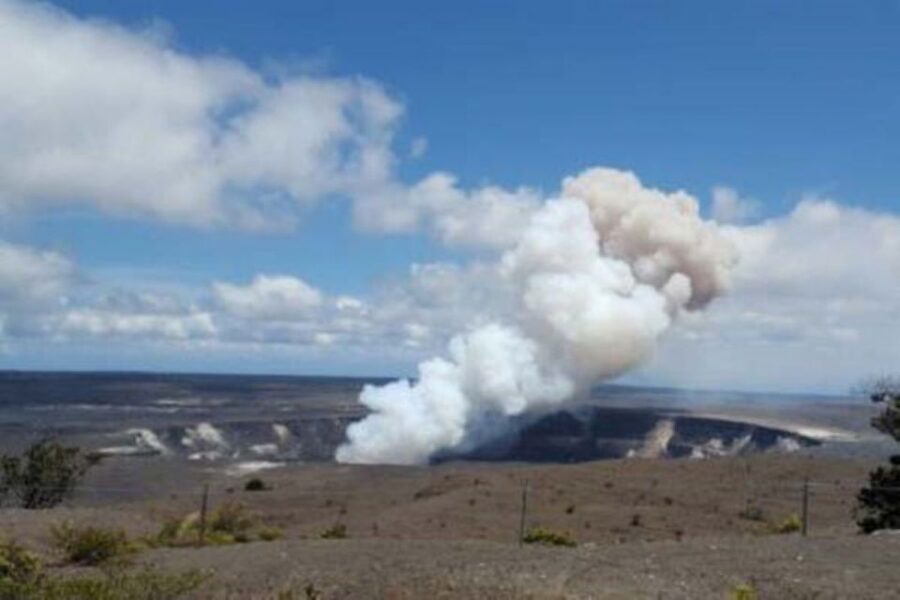
From there, the tour moves into active-feeling terrain: volcanic steam vents and sulfur banks. The steam vents are explained as groundwater seeping down into hot volcanic rocks, then returning to the surface as steam. Standing at the vents, you can look around at the contrast: between the caldera’s edge and outer cliffs of Kīlauea Caldera there’s described as a treeless plain.
That treeless plain is one of the most important clues of all. It signals the harshness of the environment and why vegetation can’t simply “fill in” like it would elsewhere. It’s a fast lesson in how geology sets the rules for everything living nearby.
Kīlauea Iki Crater: Why This Stop Hits So Hard
Kīlauea Iki Crater is singled out as the most active volcano crater in the world, and that reputation is the reason you should pay attention during this stop. The tour positions you near the crater experience as the centerpiece after you’ve built context inside the park.
What you’ll get from a guided approach here is interpretation. A crater is not just a hole in the earth. It’s a window into volcanic activity patterns and how Kīlauea shapes the island over time. On a busy day, a guide’s role is to help you read the scene quickly, so your photos aren’t just pretty—they’re meaningful.
If you’re sensitive to heat or changing weather, keep your expectations flexible. Volcano areas can feel windy and wet even when other parts of the island are calm. Wear weather-appropriate clothes, and don’t plan to spend forever at every exact overlook; move with purpose.
Chain of Craters Road and Mount Kīlauea: Moving Through the Action
After Kīlauea Iki, your day shifts onto the road network that showcases volcanic terrain. You’ll travel the Chain of Craters Road, a corridor that’s basically a drive-through geology textbook.
Then you’ll head toward Mount Kīlauea. In the tour description, it’s described as a currently active shield volcano and the most active of the five in the Hawaiian Islands. That’s a useful framing because it tells you what kind of volcanic behavior to expect: shield volcanoes are built by repeated eruptions over time, building broad slopes rather than just towering peaks.
This is where you start to feel how the island’s identity comes from repeated cycles. Roads, craters, steam, sulfur, and the ongoing “active” labels aren’t separate facts. They’re all pieces of one ongoing story.
Ancient Lava Tube and Sulfur Banks: The Texture of Volcanic Life
One of the neat additions is the tour includes an ancient lava tube stop. Lava tubes are fascinating because they’re not just about a volcano erupting. They’re about what happens afterward: molten rock travels, drains, then leaves behind hollow corridors.
The practical value here is that it changes how you experience the park. You don’t only look at it from outside. You get at least a brief sense of the underground pathways and how lava can reshape the surface with the help of invisible flow.
Pair that with sulfur banks, and you’ve got two “senses” covered: visual geology and the chemical signature that makes the area smell and feel distinct. Even if you’re not a geology buff, these stops give your brain anchors, so you remember the day as more than a set of scenic dots.
Food, Comfort, and What to Pack for a Volcano Day
You’ll have snacks and water included. Lunch is not included, so plan to eat either on your own schedule during breaks or after the tour day ends, depending on how your timing works.
Bring weather-appropriate clothing. That’s not a throwaway line in Hawaiʻi Volcanoes National Park. Conditions can shift from sun to mist, and steam areas can feel warmer or cooler than nearby overlooks. If you’re going to do black sand beach plus national park walking, wear shoes you trust on uneven, volcanic ground.
Also keep expectations realistic about mobility. The tour is listed as not suitable for people with mobility impairments. That doesn’t just mean “some walking.” Volcano terrain and park access can be uneven, and you’ll want routes that match your comfort and safety needs.
Price and Value: Is $580 Worth It?
At $580 per person, you’re paying for more than a sightseeing bus day. This price includes a full day, air ticket, admission to the national park, plus snacks and water, with an English live guide.
Whether it feels like a good deal depends on what you’d otherwise pay to DIY. If you were flying from Oʻahu to Hilo on your own, renting a car, and buying park access, your costs can add up fast, especially when you factor in your time and stress.
In other words: this price buys a lot of friction removed. You’re not piecing together travel windows, figuring out where to go for best views, and trying to interpret volcanic features without help. When the tour runs smoothly, the value comes from organization plus guided context.
The main reason it might feel steep is if you end up doing extra stress work yourself (like managing transfers that aren’t handled as expected). That’s why I recommend you go in with a calm airport plan and a little extra buffer.
Who This Tour Suits Best (and Who Should Skip)
I think this tour is a good match if you want:
- A one-day way to see both Hilo highlights and the park’s top volcano stops
- A guided flow so you understand what you’re seeing at steam vents, sulfur banks, and Kīlauea Iki
- A structured option that includes flights and park admission, plus snacks and water
I’d be cautious if you:
- Need guaranteed, simple door-to-door pickup. One review flagged a pickup mismatch and the stress of handling their own airport transfer.
- Have mobility limitations, since the tour is not suitable for people with mobility impairments.
If you’re traveling as a couple or solo and want to avoid rental-car math, this is also a smart use of your time.
Should You Book This Big Island Volcano Adventure?
I’d book it if your top priority is one packed, guided day focused on Kīlauea Iki and the best parts of Hawaiʻi Volcanoes National Park, with strong Hilo-area scenery layered in. The visitor center-to-steam-vents-to-crater arc gives you context, not just views.
Before you hit confirm, do one thing: plan your airport and check-in timing with care. The tour’s success depends on smooth travel days, and at least one guest had a pickup issue that caused stress. If you’re organized and flexible, this is the kind of trip that makes the Big Island feel real in a single day.
FAQ
FAQ
How long is the Oahu to Big Island Volcanoes National Park adventure tour?
It runs for one day.
What is the price per person?
The price listed is $580 per person.
Is park admission included?
Yes, Volcanoes National Park admission is included.
What are some of the main stops on the tour?
The tour includes the Volcanoes National Park Visitor Center, an ancient lava tube, volcanic steam vents, sulfur banks, Kīlauea Iki Crater, Richardson Black Sand Beach, Historic Banyan Drive, Liliuokalani Gardens, Rainbow Falls, Hilo Bay, Wailuku River State Park, and Chain of Craters Road.
Is lunch included?
No, lunch is not included.
What’s included with the tour besides sightseeing?
Included items are a full day tour, air ticket, snacks, and water.
Do you get a live tour guide?
Yes, you’ll have a live tour guide who speaks English.
What documents should I bring?
Bring a government-issued passport or ID (passport is needed for foreign citizens; US citizens need ID or passport). The tour also asks you to have your vaccine card with you.
How do I know when to board my flights?
Flight information is sent after confirmation. You should go to the airline check-in counter for boarding passes, arrive 30 minutes before departure to board, and note that doors close 15 minutes before departure.
Is the tour suitable for people with mobility impairments?
No, it is listed as not suitable for people with mobility impairments.