REVIEW · HONOLULU
Passport to Pearl Harbor “Private”
Book on Viator →Operated by Karma Tour Hawaii · Bookable on Viator
A full day at Pearl Harbor, paced well. This private tour strings together the USS Arizona Memorial boat ride and key WWII sites with a human, story-focused guide—plus you still get time for Punchbowl Crater and an Oahu royal-residence stop. The only real catch is the schedule is packed, so if you want to linger for hours, this 8–9 hour format may feel tight, and no bags are allowed at Pearl Harbor.
I like how the day is organized to help you make sense of what you’re seeing, not just check off buildings. In one recent group, the guide plan (including guide Mark’s smart timing) kept everyone engaged, and the history also connected to Hawaiian life in a way that made the day move faster than the clock would suggest. The experience is also built around scheduled admission, so you spend less time guessing and more time looking closely.
In This Review
- Key highlights worth your morning coffee
- Why this private Pearl Harbor day trip feels worth the $500
- Getting to Pearl Harbor: 7:30 am start and Waikiki pickup zones
- Stop 1: Pearl Harbor Historic Sites Visitor Center and the meaning of place
- Stop 2: USS Arizona Memorial, the boat ride, and the exhibit galleries
- Stop 3: USS Bowfin Submarine Museum & Park and the Silent Service feel
- Stop 4: Battleship Missouri (Mighty Mo) and the surrender moment
- Stop 5: Pearl Harbor Aviation Museum on Ford Island (Hangars 37 and 79)
- Two extra Oahu stops: royal residence time and Punchbowl Crater
- Price and value: what $500 per person buys you
- Who this tour is best for (and who should skip it)
- Should you book Passport to Pearl Harbor Private?
- FAQ
- What time does the Passport to Pearl Harbor Private tour start?
- Where is pickup, and do you pick up from every hotel?
- How long is the tour?
- What is included in the tour tickets?
- Are bags allowed at Pearl Harbor?
- Is this tour only for my group?
- Is there free cancellation?
- How does the tour handle wheelchair or scooter access?
- FAQ
- Is this tour offered in English?
- What if the boat ride gets canceled due to safety issues?
Key highlights worth your morning coffee
- USS Arizona Memorial boat ride plus guided context before you hit the exhibits
- In-person briefing at the Pearl Harbor Historic Sites Visitor Center to set the story
- USS Bowfin Museum & Park on the Silent Service, launched exactly one year after the attack
- Battleship Missouri (Mighty Mo) as the surrender site, not just a photo stop
- Ford Island aviation stops with Hangar 37 and Hangar 79 coverage plus 50+ aircraft
- Punchbowl Crater memorial for a respectful, reflective add-on beyond the WWII focus
Why this private Pearl Harbor day trip feels worth the $500
This is one of those tours where the value comes from how the time is handled. At $500 per person, you’re paying for a full-day structure: pickup coordination, a set route, and included admission/boat components so you can focus on the sites rather than logistics.
The private part matters here. Pearl Harbor days can be long and crowded, and a private group means your pacing and stops can be guided to match what you’re ready for. You’re not stuck in a long cattle-line rhythm, and your guide can steer you toward the details that actually help the story click—especially around the exhibits and the surrender context on USS Missouri.
That said, the pricing only feels fair if you actually want the breadth of stops. If your dream is hours at just one museum (or you’re traveling at a very slow pace), a private “everything” day might feel like a sprint.
You can also read our reviews of more private tours in Honolulu



Getting to Pearl Harbor: 7:30 am start and Waikiki pickup zones
Tours begin at 7:30 am. Pickup isn’t from every hotel, so you rely on designated pickup zones in Waikiki, with your pickup time and location sent by text or email about one day before, between 12 pm and 5 pm local time.
This matters because early starts are part of the trade. You get the benefit of being on-site in time for the visitor center briefing and the rest of the route, but you’ll need to be ready to move. If you’re staying outside Waikiki, plan on getting yourself to the zone rather than expecting door-to-door pickup everywhere.
Also, plan light: no bags are allowed at Pearl Harbor. That’s not a small detail. It can affect how you pack snacks, water, small chargers, and anything you’d normally want to carry around.
Stop 1: Pearl Harbor Historic Sites Visitor Center and the meaning of place
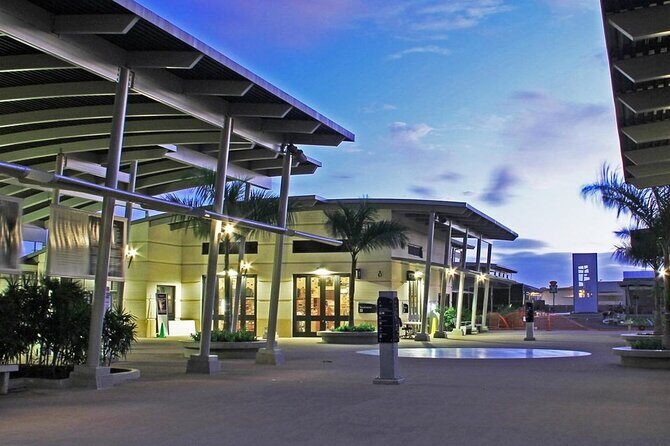
The day begins at the Pearl Harbor Historic Sites Visitor Center for about 30 minutes, including a briefing and admission. This is more than a waiting room. The visitor center is where the story gets anchored, before you’re dropped into the emotional sites.
I like this stop because it sets up the place itself. You get the meaning behind the names associated with the harbor—Pu’uloa (often described as long hill) and Wai Momi (water of pearl). Even if you already know the headline moment of December 7, this context helps you understand why people consider Pearl Harbor more than a single day of history.
What makes it practical for you: you’ll be better at reading the rest of the sites because your guide is framing what you’re about to see, rather than you trying to puzzle it out on the fly.
Possible downside: 30 minutes is brief. If you’re the type who loves to read every interpretive sign slowly, you may want to return later on your own with more time.
Stop 2: USS Arizona Memorial, the boat ride, and the exhibit galleries
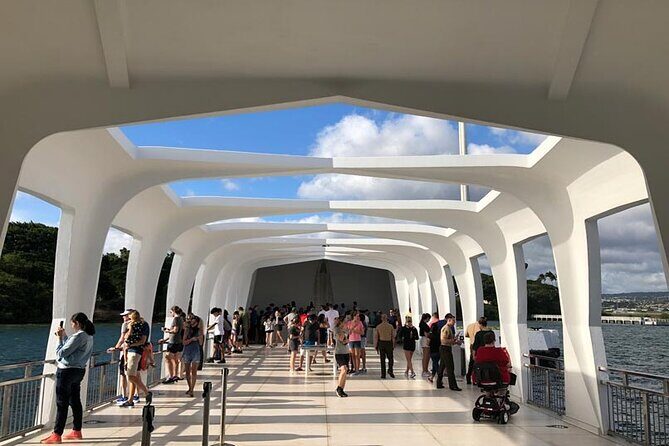
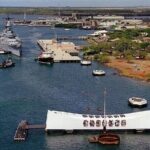
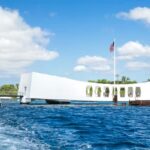
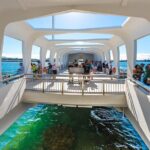
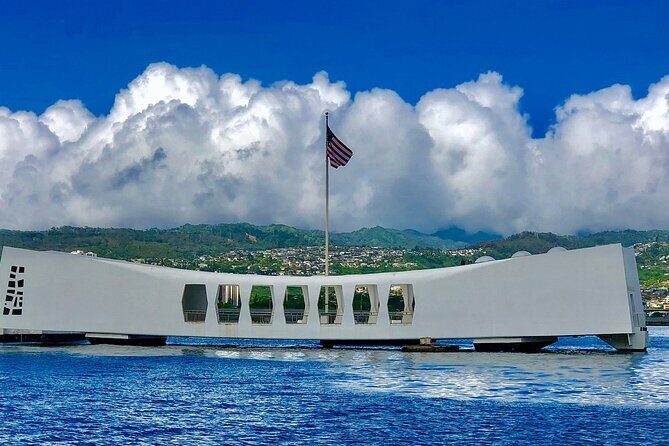
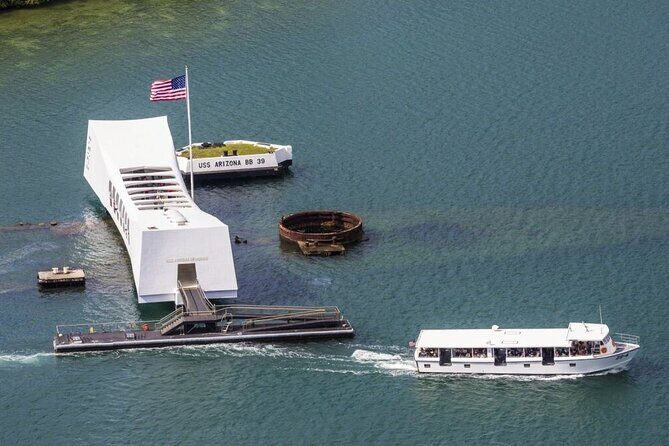
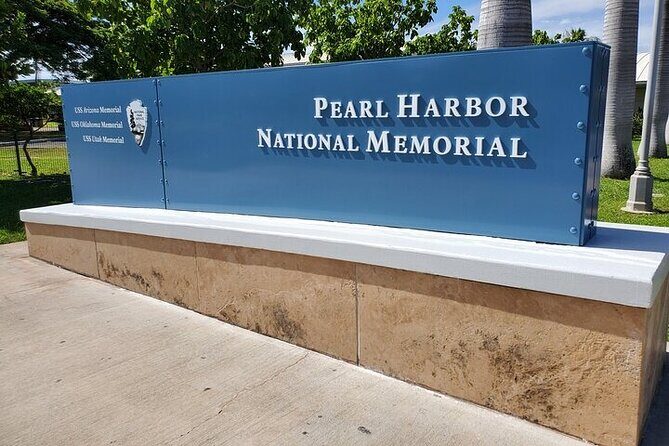
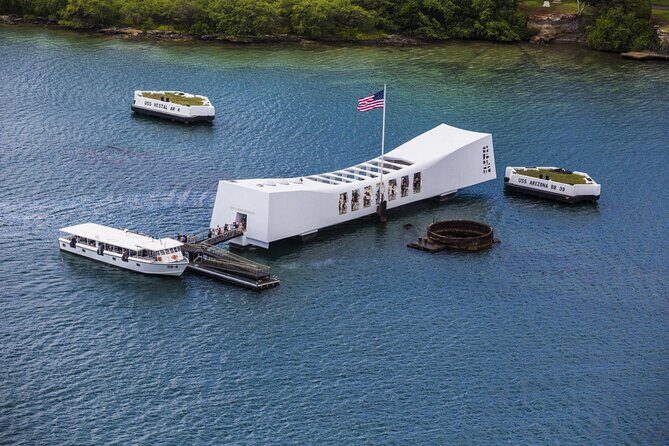
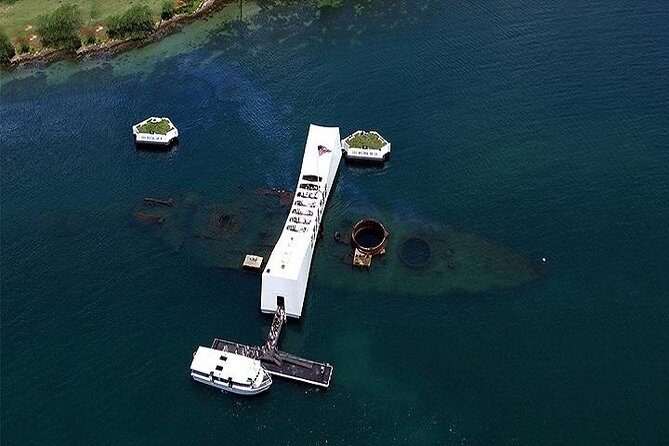
Next is the Pearl Harbor National Memorial, scheduled for about 2 hours, with the big included element: the boat ride to the USS Arizona Memorial.
This is the moment many people come for, and for good reason. The USS Arizona Memorial is strongly tied to one of WWII’s most pivotal US moments, and you get the chance to see the memorial setting in a way that only a boat ride can provide. It’s not just viewing from shore; it’s part of the experience.
On the exhibit side, you’ll also visit the galleries titled Road to War and Attack. These names are important because they shape the day in sequence: how tensions built before the attack, and then what happened during the attack itself.
Sober warning, in a helpful way: this part is emotional. One guide approach (seen in a recent booking) helped people handle it without rushing, but the reality is you’ll still feel the time pressure because the route continues after.
Stop 3: USS Bowfin Submarine Museum & Park and the Silent Service feel
After the memorial, the tour shifts gears to the USS Bowfin Submarine Museum & Park for about 1 hour, including admission.
USS Bowfin is an attack submarine that fought in the Pacific during WWII, and the “Silent Service” connection helps you picture what submarine warfare meant in practice—stealth, patience, and high stakes. Bowfin launched on December 7, 1942, exactly one year after the attack on Pearl Harbor, and it earned a nickname, often described as the Pearl Harbor Avenger. That timing gives the museum a strong emotional narrative without forcing it.
Why this stop works on a single-day tour: submarines are easier to experience in a focused block than something larger like a full aircraft museum. In an hour you can get a strong sense of the vessel’s purpose and the era, especially with a guide pointing out the key parts.
If you’re picky about museum time: one hour is solid, but it won’t let you crawl through every detail. Think of it as a strong overview, not a deep archival day.





Stop 4: Battleship Missouri (Mighty Mo) and the surrender moment
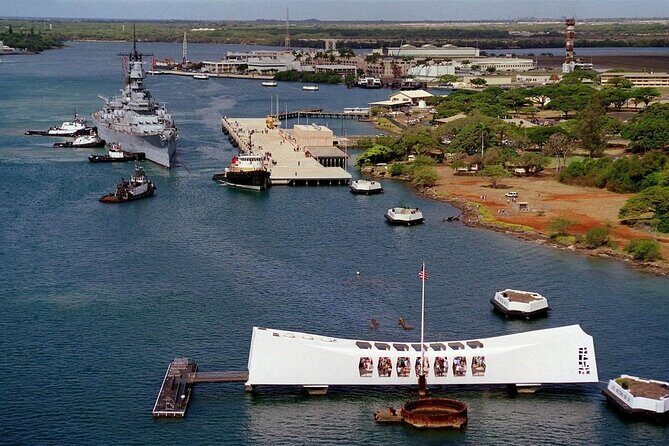
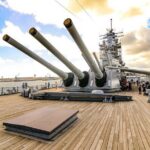
Then you head to the Battleship Missouri Memorial for about 2 hours, with included admission.
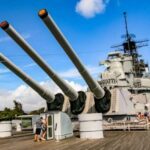
USS Missouri is often nicknamed Mighty Mo, and it earns attention for a specific reason: after fighting in the last year of the war, it served as the location where Japan signed the official surrender documents. That turns the ship into a historical marker with an ending that’s hard to find on other memorials—less about the attack, more about closure.
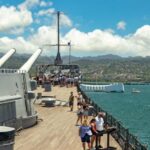
You also get time to see what life at sea was like aboard a battleship, which helps ground the story. It’s one thing to learn dates. It’s another to walk around a ship and imagine the crew routine and cramped realities that came with operating at that scale.
Practical tip for your visit: this stop can feel long and visually repetitive if you don’t have context. The guide’s role here matters, because it helps you focus on the spaces that tell the surrender story and everyday ship life, not just walkways and metal.
Stop 5: Pearl Harbor Aviation Museum on Ford Island (Hangars 37 and 79)
The Pearl Harbor Aviation Museum is where the tour adds breadth—planes, hangars, and the wider WWII air story—scheduled for about 1 hour with included admission.
The museum is on historic Ford Island, described as a 441-acre island in the middle of Pearl Harbor. The setup is powerful: on Sunday, December 7, 1941, huge ships were moored nearby, and patrol and scout planes filled hangars and airfields, all targeted in the attack.
The museum is split into key exhibit zones:
- Hangar 37, housed in an authentic World War II-era hangar, covering the story from the December 7 attack through events like Midway and beyond
- Hangar 79, which continues the story into the rise of American air superiority and carries into later wars
- The Raytheon Pavilion as part of the exhibit complex
The day’s claim of “50+ aircraft” and exhibits across Hangar 37, Hangar 79, and the pavilion is helpful, but it also explains the pace. One hour can only cover highlights, so you’ll want your guide to point out the best connections between what you see on the aircraft displays and the story you heard earlier.
Two extra Oahu stops: royal residence time and Punchbowl Crater
After the main WWII block, the tour adds two distinctly different stops on Oahu.
One is time to learn about Oahu’s only royal residence in the United States, connected to the story of unification of the islands and the overthrow of the monarchy. This is a good shift in tone. The day has been heavy and militarized; this helps bring you back to what makes Hawaii’s history local and specific.
The other is Punchbowl Crater, described as an extinct volcanic tuff cone used as a memorial for those who served in the US Armed Forces and those who gave their lives. This stop changes the emotional texture again. If you’ve felt the heaviness of Arizona, Punchbowl gives you a calmer, more reflective moment.
Because the itinerary info doesn’t specify durations for these two add-ons, I treat them as time-dependent. In a packed day, you’ll likely see these as meaningful “you were here” moments rather than long, slow explorations.
Price and value: what $500 per person buys you
At $500 per person, you’re not paying for just seats on a bus. You’re paying for a set route that includes major paid components: the boat ride to the USS Arizona Memorial, admission for the museum stops, and an in-person briefing at the Pearl Harbor visitor center. The tour duration is listed as 8–9 hours including travel time.
Value comes from three places:
- Scheduling and admission coverage. You’re not spending your trip troubleshooting timed access for the most popular sites.
- Guided context. The difference between walking through WWII exhibits with no framing and walking through them with a plan is huge. One recent booking highlighted how the guide kept people engaged with history and Hawaiian life, and that’s exactly the kind of advantage you’re paying for.
- A private-group pace. If you’re traveling with friends or family and you want fewer headaches, this format can be worth it.
The main tradeoff is opportunity cost. You’re committing to a full day. If you’d rather spend more time at one spot (for example, returning after lunch to read slowly), you’ll want to know a private “everything” day might not match your style.
Who this tour is best for (and who should skip it)
This tour fits best if you want an organized, high-impact day on Oahu without doing homework on logistics. It’s also ideal if you like learning with a guide—one review specifically highlighted a plan that kept the day engaging, and another noted how the USS Arizona stop felt sobering and memorable.
You might want a different plan if:
- You strongly prefer unhurried museum time with lots of free wandering
- You pack bulky items and don’t want to deal with no bags allowed
- You’re traveling with accessibility needs and your mobility device might not fit all vehicles (the tour notes not all vehicles can accommodate wheelchairs and scooters, and you’re asked to call after booking)
Should you book Passport to Pearl Harbor Private?
Book it if you want a focused, guided WWII day that also includes reflective and cultural add-ons. The included boat ride, the visitor-center briefing, and the way the stops cover both the attack story and the wider WWII context (submarine + aviation + battleship) make it feel like a complete overview rather than a pile of separate tickets.
Skip or reconsider if you’re the type who needs long dwell time at memorials and museums. In an 8–9 hour day, you’ll get highlights and strong context, but you won’t get hours and hours of quiet reading.
If your goal is to leave with a clear story and a well-managed schedule, this is the kind of tour that saves you effort and helps you see more.
FAQ
What time does the Passport to Pearl Harbor Private tour start?
The start time is 7:30 am.
Where is pickup, and do you pick up from every hotel?
Pickup is offered from designated zones in Waikiki, not from all hotels. You’ll receive your pickup time and location by text or email one day prior, between 12 pm and 5 pm local time.
How long is the tour?
It runs about 8 to 9 hours (including travel time).
What is included in the tour tickets?
The tour includes a boat ride to the USS Arizona Memorial and admission tickets for the museum stops, along with an in-person briefing at the Pearl Harbor Visitor Center.
Are bags allowed at Pearl Harbor?
No. No bags are allowed at Pearl Harbor.
Is this tour only for my group?
Yes. This is listed as a private tour/activity, so only your group participates.
Is there free cancellation?
Yes. You can cancel for a full refund up to 24 hours in advance of the experience start time.
How does the tour handle wheelchair or scooter access?
Not all tour vehicles can accommodate wheelchairs and scooters. You’re asked to call right away after booking to make arrangements.
FAQ
Is this tour offered in English?
Yes, the tour is offered in English.
What if the boat ride gets canceled due to safety issues?
The tour notes it can be non-refundable if the National Park Service or Navy cancels boat ride programs due to mechanical issues, dangerous weather, or other safety concerns.

![Pearl Harbor [Early Access], USS Arizona & Historic Honolulu Tour - Pearl Harbor National Memorial: museums, a short orientation, then self-guided time](https://b.thehonoluluguide.com/wp-content/uploads/pearl-harbor-early-access-uss-arizona-historic-honolulu-tour.jpg)