REVIEW · HONOLULU
Manoa Falls Rainforest & Self-Guided Hike
Book on Viator →Operated by Kaimana Tours · Bookable on Viator
A trip into the Manoa rainforest feels like stepping into a movie set. You’ll get the practical lift of a round-trip shuttle from select Waikiki hotels, then hike self-guided through lush eucalyptus and footbridge country to the base of the 150-foot falls. I like that you’re not stuck with parking stress or route-finding, and I also like the included water, bug spray, and a walking stick for a safer, more comfortable climb.
The main thing to keep in mind is that this hike can be steep and slippery, especially when rain hits, and the waterfall can be thin (or even hard to see) depending on recent weather.
In This Review
- Quick hits before you hike Manoa Falls
- Manoa Falls: Why This Rainforest Hike Fits a Half-Day in Oahu
- Getting the Trail Right: Distance, Incline, and Slippery Rocks
- Waikiki Shuttle Value: What Transportation Changes in Your Day
- What the Self-Guided Part Actually Means at Manoa Falls
- Trailhead Setup: Walking Stick, Water, and Bug Spray
- Hiking to the Base: Footbridge Moments and Tropical Eucalyptus Walks
- The Waterfall Reality Check: Underwhelming Flow Happens
- Price and Logistics: Is $52.99 Worth It?
- Who This Hike Suits (and Who Might Skip It)
- Practical Tips That Make Manoa Falls Much Easier
- Should You Book This Manoa Falls Rainforest & Self-Guided Hike?
- FAQ
- How long does the Manoa Falls rainforest hike take?
- Do I get picked up in Waikiki?
- If I’m not staying in Waikiki, where do I meet the shuttle?
- What’s included for the hike?
- Is the hike actually self-guided?
- Is it safe to swim or drink water at the falls?
- What fitness level do I need?
- What is the cancellation policy?
Quick hits before you hike Manoa Falls
- Waikiki shuttle makes the day easy: round-trip transportation from select hotels, with a trailhead drop so you can start walking fast.
- You get gear that matters: bottled water, bug spray, and a walking stick—use them on the rocky, uneven sections.
- The trail is forgiving to navigation, not to your ankles: muddy patches, loose stones, and uneven footing are common.
- The hike is short, but not flat: you’re looking at roughly 1.3 km (0.8 mile) up to the falls area, plus the return.
- Waterfall flow is weather-dependent: plan for variety, not guarantees of a roaring curtain of water.
Manoa Falls: Why This Rainforest Hike Fits a Half-Day in Oahu
If you only have part of a morning (or you’re trying to keep your plans realistic), this works well. The total experience runs about 3 hours 30 minutes including transport, so you get a true taste of rainforest hike life without committing to a full-day trek.
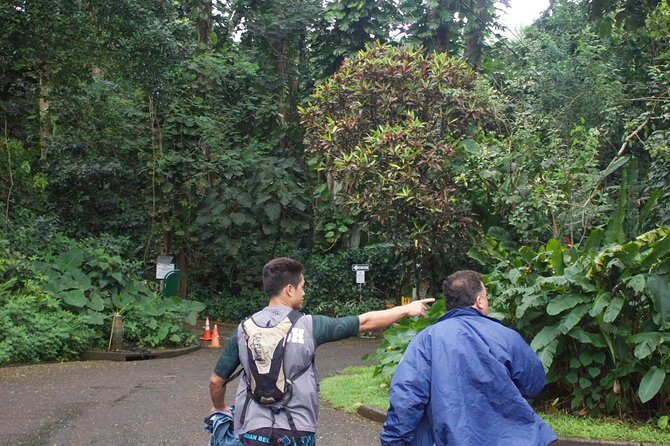
What makes it appealing is the mix: you’re in charge of your pace, but you’re not doing it alone in the practical sense. The shuttle handles getting you from Waikiki to the trail area, and the driver provides directions and local context during the ride. Once you’re at the start, it turns into a self-guided hike where you can stop for photos, pause for the mosquitoes to calm down, and take breaks when the incline asks for them.
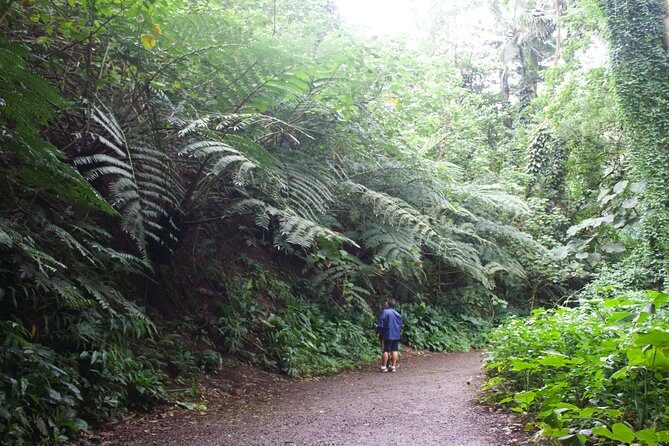
The vibe is very “Oahu up close.” Expect eucalyptus groves, a real footbridge moment, and plenty of tropical flora along the way. It’s also a hike that can feel like a throwback to big-screen nature scenes, because the plants and textures are dramatic—one reason people love bringing a camera.
You can also read our reviews of more guided tours in Honolulu

Getting the Trail Right: Distance, Incline, and Slippery Rocks
Let’s set expectations clearly: this is a moderate rainforest trail with sections that can feel more challenging than the word moderate suggests—especially when wet.
Here’s the useful framing:
- You’ll be hiking to the base of Manoa Falls, which is a 150-foot waterfall area.
- The trail distance you’ll cover is described in two ways: about 0.8 mile (1.3 km) of hiking, and also as an approximately 2-mile rainforest trail overall (including the return). In practice, plan for an up-and-back effort, not just a quick stroll.
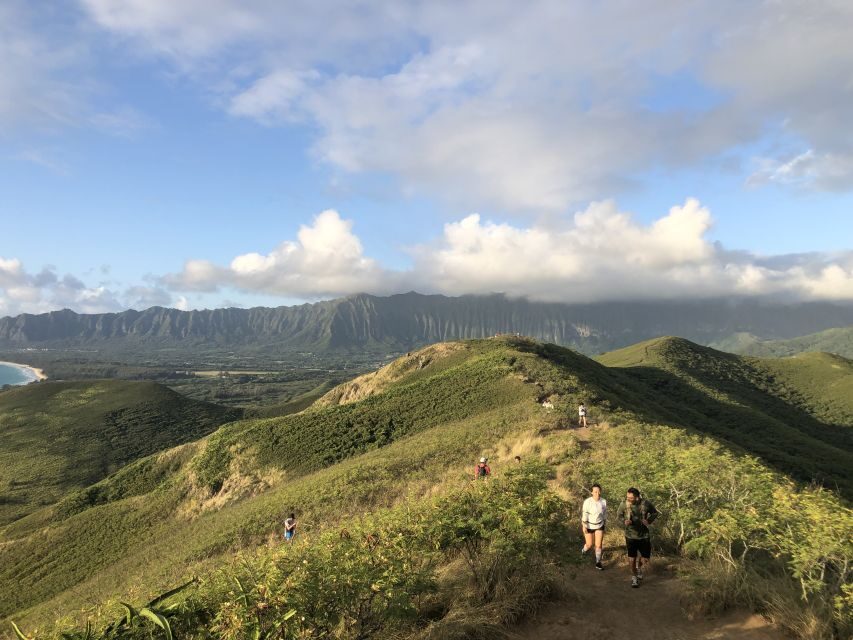
- The route includes an incline, unpaved rocky sections, stairs, and even boulder-climb type moments near the waterfall area.
- When rain hits, the ground can turn muddy and slick, and the stones can get coated in that slippery, wet-film feel that makes you pay attention to every step.
I strongly recommend sneakers or hiking shoes with a solid grip—ideally ones you don’t mind getting muddy. In the real world, this is the kind of hike where you’ll feel it in your calves on the way up, and you’ll want good traction on the way down.
Also: yes, the walking stick is there for a reason. If you’re confident on your feet, you might not “need” it. If you’re trying to make the hike more comfortable (or safer on the descent), the stick helps.
Waikiki Shuttle Value: What Transportation Changes in Your Day
The price can look a little steep at first glance—$52.99 per person—until you think about what’s being bundled. This is not only about getting to Manoa Falls. It’s about removing the two biggest headaches for many visitors: getting there without a car and figuring out parking.
You have two ways to make it work:
- If you’re staying in Waikiki, you’ll have round-trip shuttle service from select Waikiki hotels.
- If you’re not in Waikiki, you can use the free parking lot at 2805 Monsarrat Ave, Honolulu, HI 96815, then walk to the Queen Kapiolani Hotel for shuttle pick-up.
This matters because Manoa Falls can be easier when you can show up, check in mentally, and start hiking. You don’t waste energy negotiating routes, worrying about where to park, or timing a return drive on busy roads.
And one more small but real benefit: the driver often shares local context that makes the “where am I?” feeling click faster. Multiple drivers are known to point out landmarks tied to popular culture—like spots connected with President Obama’s early life (including a hospital tied to birth records) and the school connection for The Rock. It’s not the main attraction, but it adds color while you’re on the way.
What the Self-Guided Part Actually Means at Manoa Falls
This is a self-guided hike, meaning you won’t be staying with a ranger or guide for every step. Instead, you’ll get directions and support while you’re coordinating the day, plus the practical safety items that help you handle the trail.
So you’re responsible for:
- following the route cues you’re given,
- pacing yourself,
- and making smart footwear choices when the trail goes uneven.
The good news is that navigation is straightforward. The tougher part is physical, not “where do I go.” Reviews and on-trail experiences consistently highlight the footing challenge—rocks, uneven ground, and the occasional slippery stretch—more than any confusion about the path.
A nice element here: you can slow down without feeling awkward. If you want to spend time watching birds or photographing plants, no one is rushing you along a “follow-the-leader” line.
Trailhead Setup: Walking Stick, Water, and Bug Spray
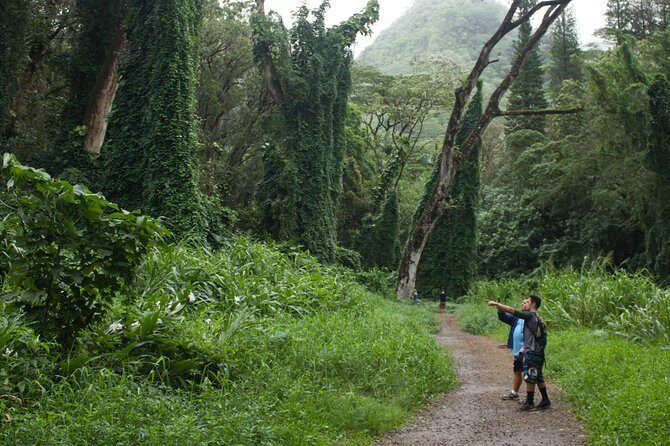
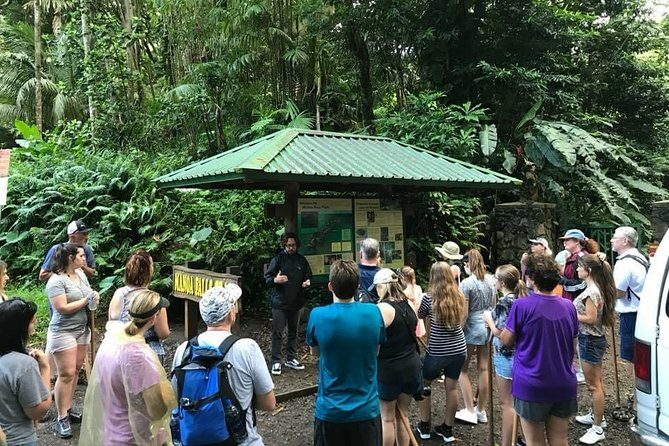
Before you start climbing, you’ll be given what you actually need for a rainforest hike:
- bottled water
- a walking stick
- bug spray
- national park fees included
That bundle is one of the most praised parts of the experience for a simple reason: insects and slick ground aren’t optional in a rainforest. The bug pressure can be real, and mosquitoes tend to show up where vegetation stays dense and humidity hangs around. Plan for it.
On the gear side, I’d treat the walking stick like a smart accessory, not a toy. Many hikers find the hardest part is the descent—your knees and balance take the hit. The stick gives your arms and legs something extra to help you negotiate uneven footing, especially if the trail turns muddy.
Clothing matters too. Comfortable clothes and sturdy sneakers are recommended, and if it looks even slightly damp, it’s worth wearing pants or leggings to cut down on skin exposure to bugs and plants.
You can also read our reviews of more tours and experiences in Honolulu
Hiking to the Base: Footbridge Moments and Tropical Eucalyptus Walks
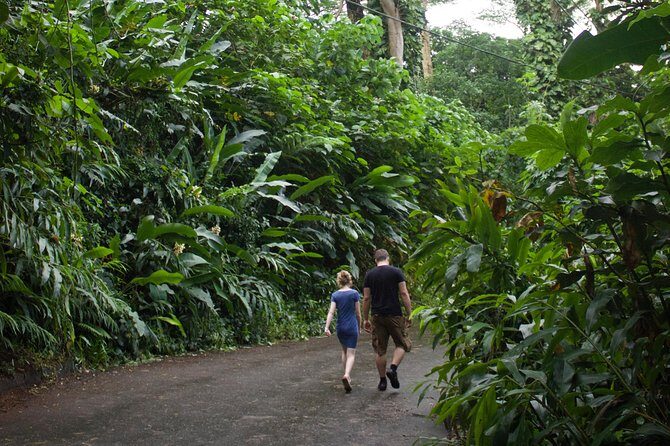
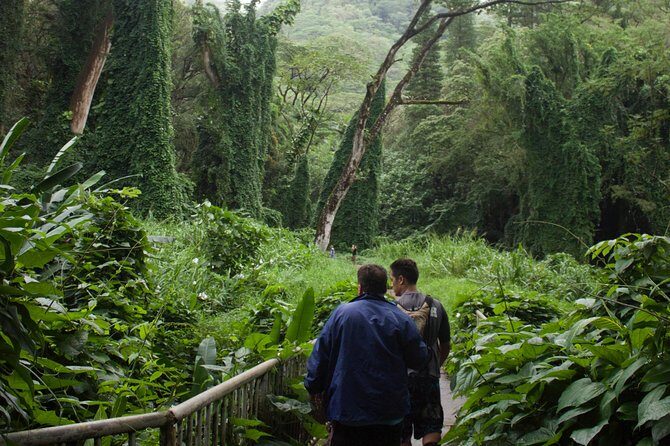
As you move away from the start, you’ll transition into the real “rainforest feels like Hawaii” experience: eucalyptus groves, wet-smelling air, and a trail that’s active with birds and small wildlife.
Along the way, you’ll cross a footbridge and pass a small stream, which helps break up the hike visually. It’s also the kind of scenery that rewards slow stops. If you’re photographing, this is where you’ll catch the light filtering through leaves and the textures of tropical plants.
One of the best cues I can give you is to expect the hike to feel longer than the distance suggests because the ground isn’t uniform. Even when the incline is gentle, uneven stones and roots change your rhythm. If you keep stepping carefully instead of powering through, you’ll enjoy the hike more and arrive less exhausted.
Near the waterfall area, the terrain can get more demanding. Reviews often mention a challenging section at the end of the main hike, with boulder-climb type movement. The walking stick can help here, but the bigger key is going steady and staying mindful of your footing.
The Waterfall Reality Check: Underwhelming Flow Happens
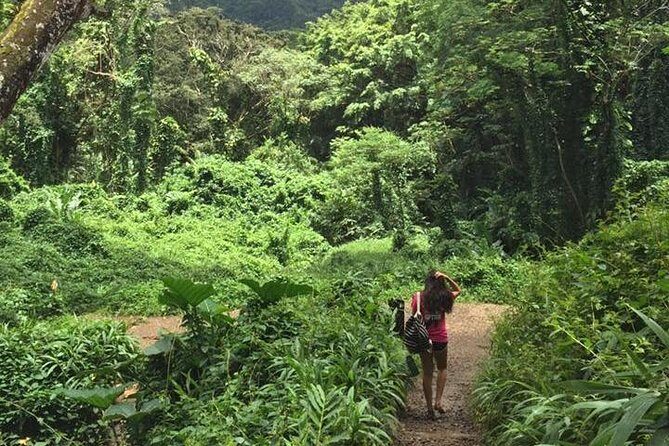
Manoa Falls is famous, but it’s also a natural feature, and nature doesn’t follow a schedule.
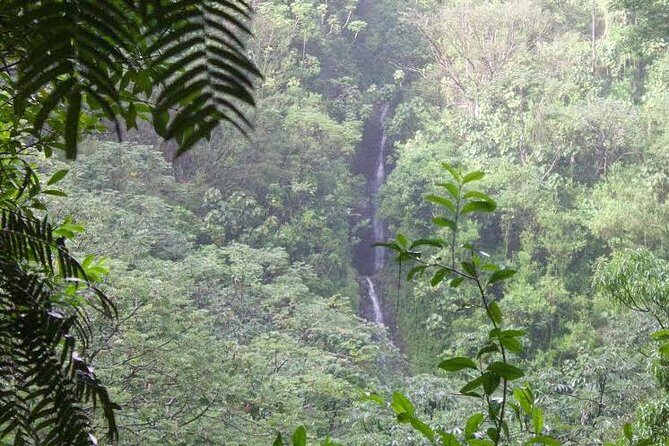
The waterfall’s appearance depends heavily on recent rainfall. On heavier-rain days, you should see a stronger flow. On dry spells—or if rain didn’t hit the area the way you hoped—the waterfall can be thin, or you may find less water coming down than you expected.
This is where setting expectations saves your mood. If you show up thinking you’ll always see a full, roaring curtain, you may feel disappointed when it’s more subtle. If you show up ready to enjoy the rainforest hike and treat the falls as the payoff (not a guaranteed spectacle), you’ll probably feel happier with the day.
Also, remember the safety rules:
- swimming isn’t safe
- drinking the water is prohibited
So bring water for yourself, not for sipping from the environment.
Price and Logistics: Is $52.99 Worth It?
Let’s do a straight value check.
At $52.99 per person, you’re paying for:
- round-trip shuttle transportation from select Waikiki hotels (or managed access if you’re not staying in Waikiki),
- national park fees,
- and the trail essentials: bottled water, bug spray, and a walking stick.
If you have a rental car and you’re comfortable with parking and planning, you could, in theory, DIY the visit. But you’d still have to figure out timing, and you may end up spending time hunting parking or dealing with logistics you’d rather use for hiking.
This tour tends to be a good value if:
- you want a low-stress start,
- you don’t want to manage parking and return timing,
- and you appreciate having the practical gear handed to you instead of packing your own.
It’s not the best deal if you’re looking for a long, guided experience. This is transport plus self-guided hiking, not a full-on guided trek with constant instruction.
Who This Hike Suits (and Who Might Skip It)
This hike is best for people who want an up-close rainforest walk with a short route that still asks something of your legs.
You should feel good booking if you:
- have moderate physical fitness,
- can handle uneven, rocky trail surfaces,
- and are willing to take the slower pace that a slippery rainforest trail requires.
It’s not recommended for:
- ages older than 65
- children under 3
- people with disabilities, based on the provided guidance.
Also, be prepared for crowds on a popular route. The trail can be busy, and that doesn’t ruin the experience—it just means you’ll share the photo stops and watch for people moving slower ahead of you on slick sections.
Practical Tips That Make Manoa Falls Much Easier
These are the things that consistently matter on this hike.
Shoes with grip
Don’t treat this like a casual walk. The rocks and stones can be slick, and you’ll be happier with traction than with fashion.
Use the walking stick
Even if you feel steady, use it on the descent. Your knees will thank you.
Go early if you can
Some people love starting at 7am for a calmer feel and fewer crowds, plus cooler conditions.
Expect bugs
Use the provided bug spray, and if you’re prone to bites, add leggings or long pants to limit exposed skin.
Plan for wet ground
Rain or shine is part of the deal. If the trail has rained recently, expect mud, slippery stones, and slower walking.
Treat waterfall flow as a bonus
If it looks lighter than expected, your real win is the rainforest hike itself.
Should You Book This Manoa Falls Rainforest & Self-Guided Hike?
I’d book this if you want the simplest path to a real Hawaii rainforest hike: shuttle convenience, included safety gear, and a self-guided route where you can hike at your pace.
Skip it (or reconsider) if:
- you want a long, guided explanation on every step (this is not that),
- you’re worried about steep, rocky, slippery footing,
- or you’re traveling with someone who needs easier terrain than this offers.
If you’re the type who enjoys nature photos, bird-and-plant watching, and the satisfaction of reaching a waterfall after a proper climb, this is a strong pick for a half-day in Honolulu. Just come prepared for the workout and keep your waterfall expectations flexible.
FAQ
How long does the Manoa Falls rainforest hike take?
The experience runs about 3 hours 30 minutes on average, including the hike time and round-trip transportation.
Do I get picked up in Waikiki?
Yes. Round-trip transportation is offered by shuttle from select Waikiki hotels.
If I’m not staying in Waikiki, where do I meet the shuttle?
You can park at the free parking lot at 2805 Monsarrat Ave, Honolulu, HI 96815, then walk to the Queen Kapiolani Hotel for shuttle pick-up.
What’s included for the hike?
National Park fees, bottled water, a walking stick, and bug spray are included.
Is the hike actually self-guided?
Yes. You hike on your own with directions provided, while transportation is handled by shuttle.
Is it safe to swim or drink water at the falls?
No. Swimming isn’t safe and drinking the water is prohibited.
What fitness level do I need?
The hike is intended for travelers with a moderate physical fitness level, and it’s not recommended for ages older than 65.
What is the cancellation policy?
Free cancellation is available up to 24 hours in advance for a full refund. If you cancel less than 24 hours before the start time, you won’t receive a refund.