REVIEW · HONOLULU
Waikiki Beach: Surf Lessons
Book on GetYourGuide →Operated by Hans Hedemann Surf Shop · Bookable on GetYourGuide
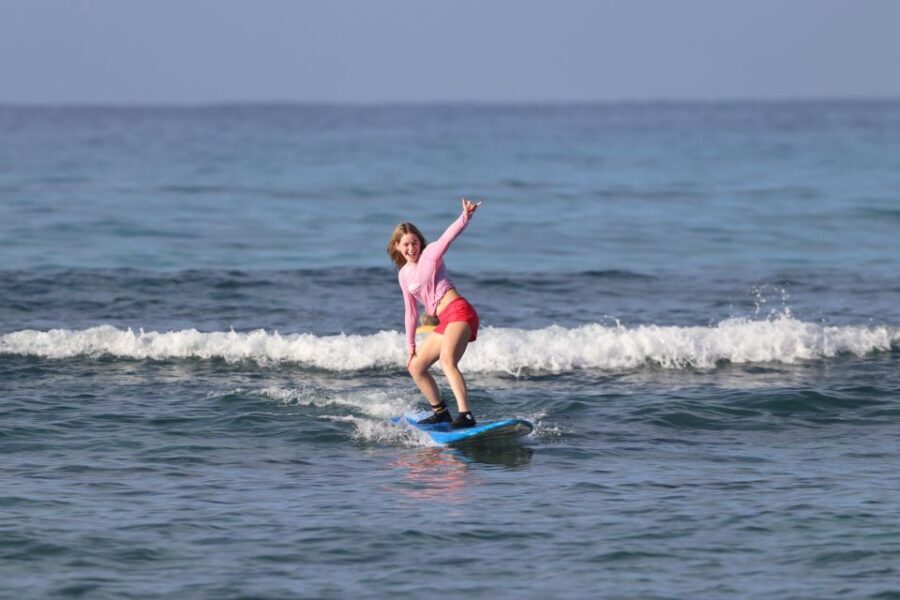
Waves teach fast, if you’re guided right. That’s what makes Waikiki Beach Surf Lessons with Hans Hedemann Surf School a great fit: you get hands-on coaching from ISA-certified instructors and the lesson stays small enough for real feedback. You don’t need experience, and you’ll be taught the fundamentals you need to paddle, stand, and ride.
One thing to consider: this is an active 2-hour session that asks for moderate physical effort, plus you’ll need to follow safety guidance closely.
Key highlights to look for
- ISA-certified instruction that focuses on safety first and skills second
- Small-group coaching so you’re not just watching from the shore
- Equipment included: surfboard, rash guard, and reef shoes
- Soft-top boards and safety briefings designed for beginners
- All ages that fit the rule: lessons are for ages 14 and up, all skill levels
- English, Korean, and Japanese support for easier communication
In This Review
- Waikiki Beach Surf Lessons: Why This Spot Works for Beginners
- Hans Hedemann Surf School: The Setup Before You Hit the Water
- Your 2-Hour Lesson Flow: What Happens From Start to Finish
- What You’ll Wear and Use: Gear That Actually Helps
- Instruction You Can Use: Paddle, Pop-Up, and Catching the Right Moment
- Price and Value: Is $112 Worth It in Waikiki?
- Who Should Book This Surf Lesson (And Who Shouldn’t)
- Practical Tips That Make Your Session Smoother
- Should You Book Waikiki Beach Surf Lessons with Hans Hedemann?
- FAQ
- Where do I meet for the Waikiki Beach surf lesson?
- How long is the lesson?
- What’s included in the price?
- What should I bring with me?
- Is this lesson for beginners?
- Who is it not suitable for?
Waikiki Beach Surf Lessons: Why This Spot Works for Beginners

If you’re new to surfing, location matters as much as instruction. Waikiki is one of those places where the ocean feels alive but the vibe is very teachable, meaning you’re surrounded by the kind of surf setting that works for learning rather than competing.
What I like here is that the lesson is built around a beginner-friendly goal: learn how to control the basics so you can start catching waves with confidence. You’ll focus on the motions that matter most—paddling out, getting set up, standing up, and making it happen at the right moment—rather than guessing your way through.
The other reason Waikiki is such a practical choice is simple: you can go from meet-up to water fast. The session is guided start-to-finish, so you’re not spending your first surfing day figuring out where to stand, what to wear, or how to manage the board.
Hans Hedemann Surf School: The Setup Before You Hit the Water
This experience starts at Hans Hedemann Surf Shop, inside the lobby at Queen Kapiolani Hotel, right at 150 Kapahulu Ave. Plan to check in 20 to 30 minutes early so you have time to get sorted before the group moves to the beach.
That early buffer matters more than people think. Surfing lessons move at ocean speed. If you’re late, you lose the chance to get fitted, get comfortable, and absorb the first safety instructions—those first minutes set the tone for the whole session.
Inside the shop, you’ll be guided by certified instructors who prioritize safety and enjoyment. The overall feel from the lesson format is straightforward: you get what you need, you get taught what to do, and you spend your time on the water actually practicing.
Also, you’ll use safe storage lockers during the lesson. That’s a small detail, but it helps you relax. You’re not juggling belongings while you’re changing into swim gear or stepping away to paddle.
You can also read our reviews of more tours and experiences in Honolulu


Your 2-Hour Lesson Flow: What Happens From Start to Finish
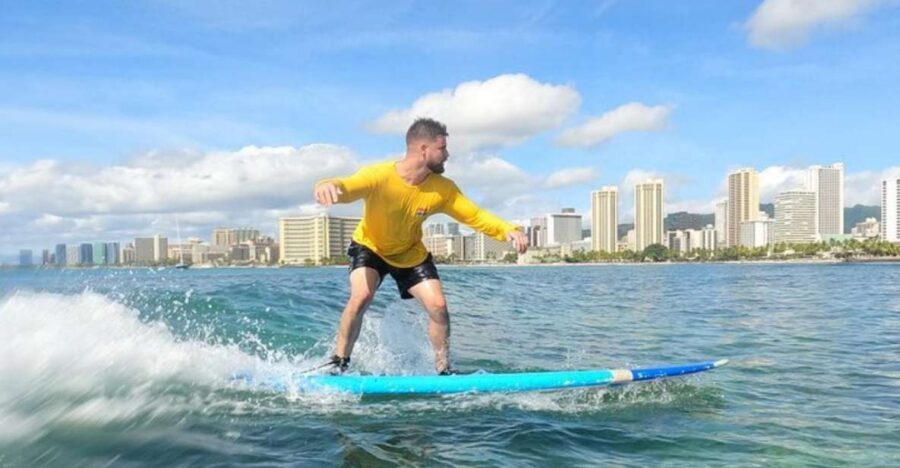
The session is designed as a tight, two-hour block that keeps you moving and practicing. It follows a simple rhythm: meet up, safety briefing, hands-on class time in the water, then return back to the starting point.
Here’s what you can expect in a practical sequence:
1) Meet and check in
You’ll arrive at Hans Hedemann Surf Shop inside the Queen Kapiolani Hotel lobby. Use this time to confirm your gear size and get oriented. The earlier you arrive, the less rushed you’ll feel.
2) Move to Waikiki Beach and get a safety briefing
Before anyone starts trying to ride, you get a safety talk. It’s not just rules for rules’ sake. It’s the difference between guessing and knowing how to act when you’re on the board, in the water, and around waves.
3) Hands-on class in the surf
You’ll work through the key surfing skills with instructor guidance—paddle, stand up, and ride waves. Because this is a small group, you’re more likely to get coaching when you need it instead of waiting your turn.
4) Return to the meeting point
After the class time, the group wraps up and you head back to the start area at 150 Kapahulu Ave.
If you’re the kind of person who likes clear structure, you’ll appreciate the way this lesson is built. You’re not guessing what’s next, and you’re not stuck standing around too long.
What You’ll Wear and Use: Gear That Actually Helps
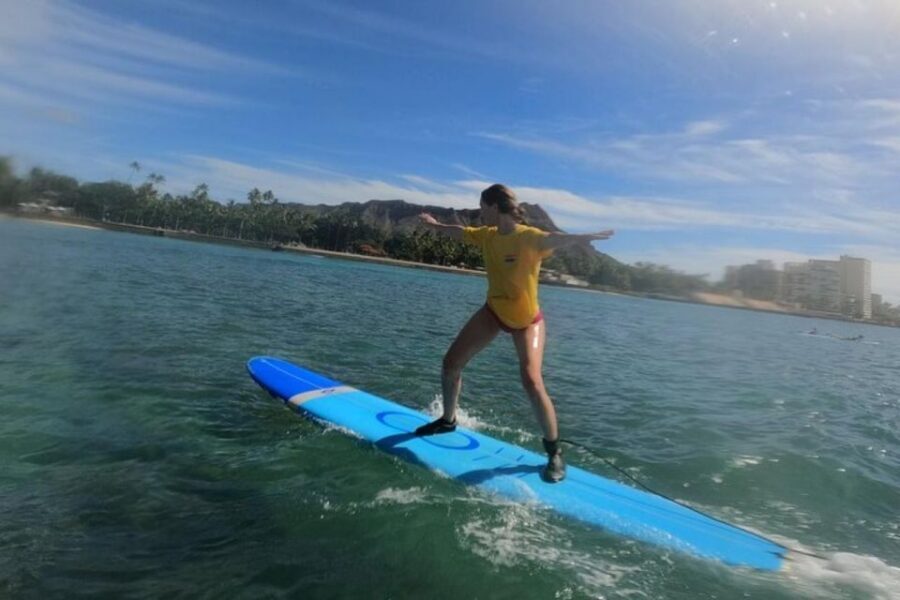
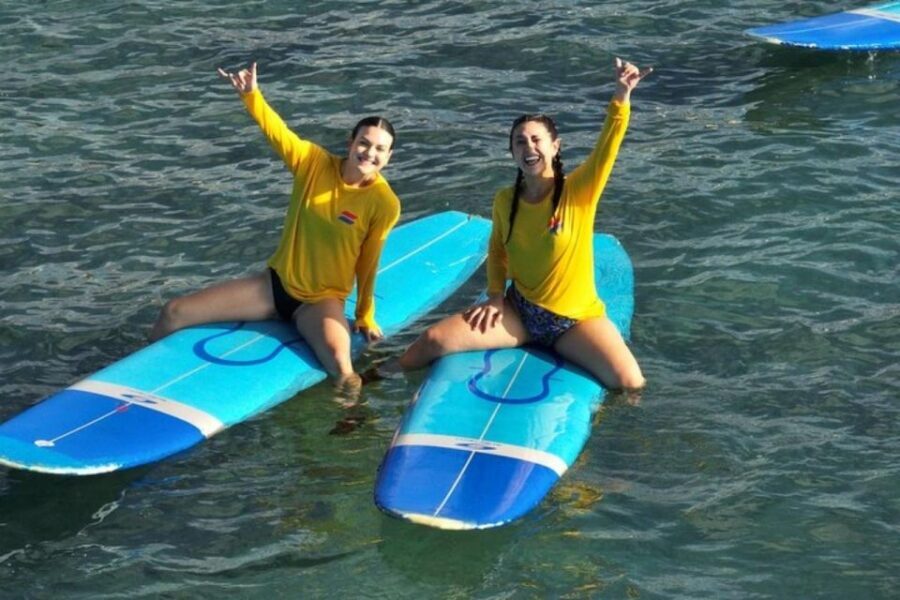
Surf lessons go better when the equipment fits the learning stage. Here, you’re provided with everything you need, including a surfboard, rash guard, and reef shoes, plus a leash as part of the kit.
That matters because beginners usually struggle with two things at once: learning the movement and staying comfortable. The rash guard helps you stay protected while you practice. Reef shoes improve traction, which makes stepping on and off the board and moving around in the water less stressful. And the surfboards used for instruction are described as high-quality soft-top boards, which are typically more forgiving for beginners than harder boards.
You won’t have to spend your Hawaii time hunting for gear or worrying if it’s the right kind. You can just focus on the fundamentals.
One more practical note: you’ll want to bring a towel, sunscreen, and beachwear. Even with included gear, you still need to cover the basics for changing and sun protection.
Instruction You Can Use: Paddle, Pop-Up, and Catching the Right Moment
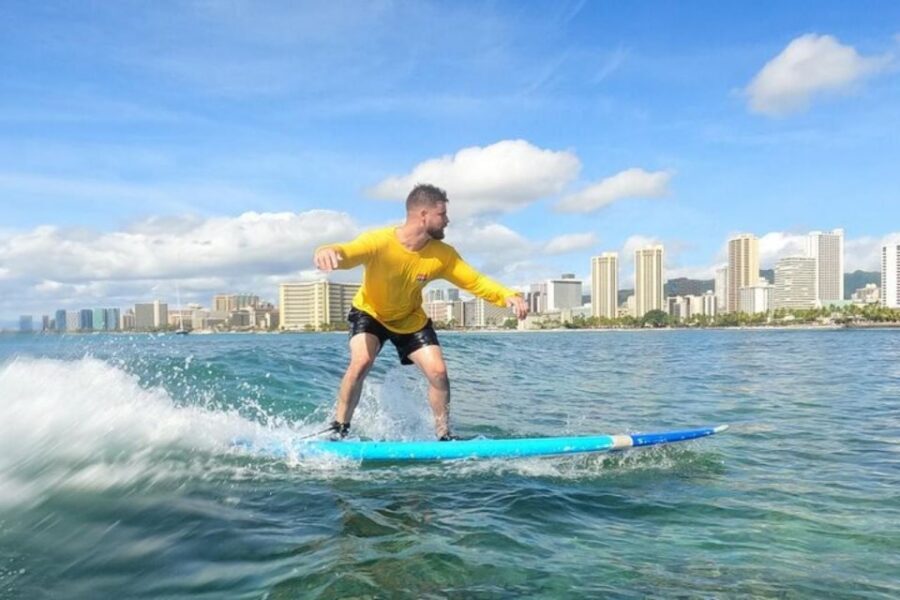
The lesson’s main job is to help you connect three stages that beginners often treat like separate problems.
- Paddling out: You’ll get coaching on how to move on the board in a way that sets you up for the rest.
- Stand up: This is where you learn the body mechanics and timing so you’re not just getting lucky.
- Riding: You’ll practice catching and riding waves with guidance aimed at helping you repeat what worked.
What I like about this style is that it’s action-based. You’re not only listening. You’re on the water, trying the movements, then adjusting with instructor feedback.
Because the lessons are available as group options with small groups, the teaching rhythm usually feels more personal than the big-class chaos you can find elsewhere. You’re more likely to get targeted reminders like hand placement, stance, or pacing your movement.
If you’re worried you’ll fall a lot, that’s normal. The key is that the instruction is designed for beginners, with safety briefings and beginner-appropriate boards. Falling is part of learning. The goal is that you learn faster because you’re coached in real time.
Price and Value: Is $112 Worth It in Waikiki?
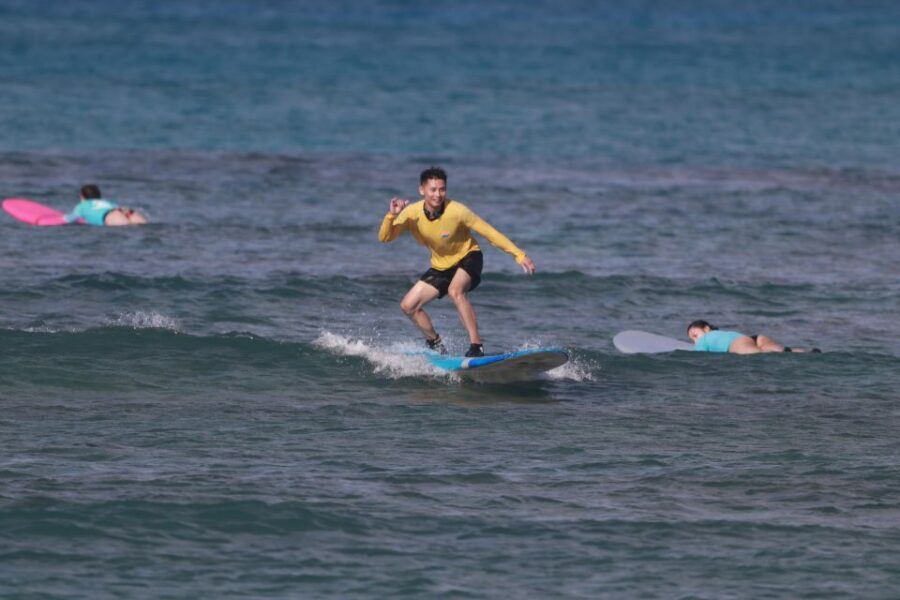
At $112 per person for a 2-hour lesson, you’re paying for three things:
1) Professional, certified instruction
This isn’t a free-for-all surf rental. You’re paying for coaching built around safety and skill progression.
2) All equipment included
Surfboard, rash guard, reef shoes, and the related gear are part of the package. That’s value you feel immediately, especially if you’re traveling light or don’t want to add a gear rental to your plans.
3) A structured learning session
The time is organized: safety briefing, practice, and wrap-up. You get a clear block of instruction rather than piecing together a half-day on your own.
Where this price feels especially reasonable is if you care about learning the right way from day one. Surfing is one of those sports where bad technique can stick. A guided first session helps you build a foundation faster than trial and error.
The only way it wouldn’t feel like a great deal is if you’re not physically ready to participate or you’re not comfortable in the ocean. In that case, you’d end up spending the session focused on your limits rather than the skills.






Who Should Book This Surf Lesson (And Who Shouldn’t)
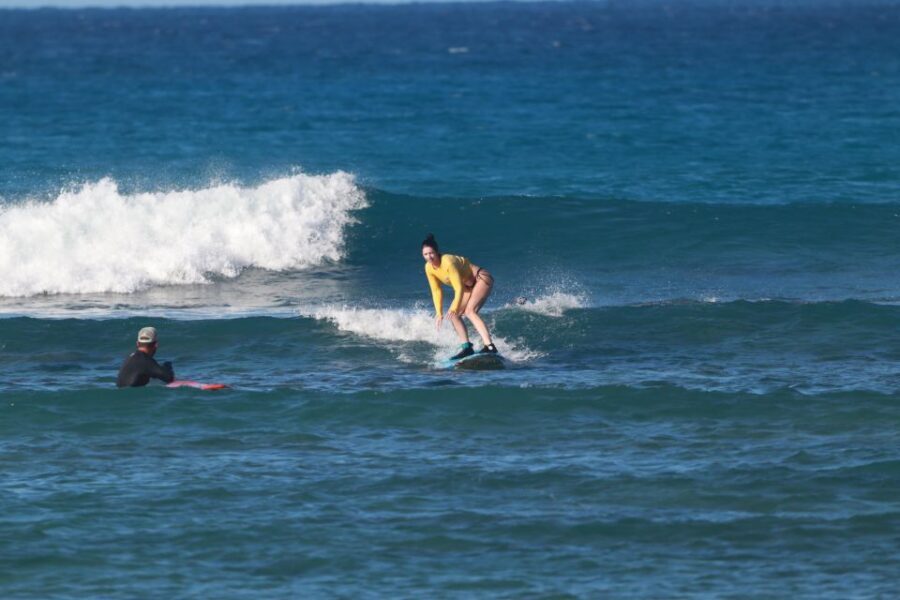
This is designed for beginners of all skill levels, with the emphasis on making the learning process manageable. But it comes with important boundaries.
Best fit:
- People who are 14 and up
- Beginners who want guided practice in Waikiki
- Anyone who prefers small-group teaching
- You’ll likely enjoy it most if you’re okay with moderate physical activity
Not suitable:
- Children under 14
- Pregnant women
- People with back problems
- Non-swimmers
Also, you’ll be asked to inform the team about medical conditions or physical limitations. That’s not paperwork for show; it affects how you’re advised and how you participate safely.
If you meet the basic requirements, this is a smart first surf step. Waikiki gives you a fun setting, and you’re not left to figure it out alone.
Practical Tips That Make Your Session Smoother
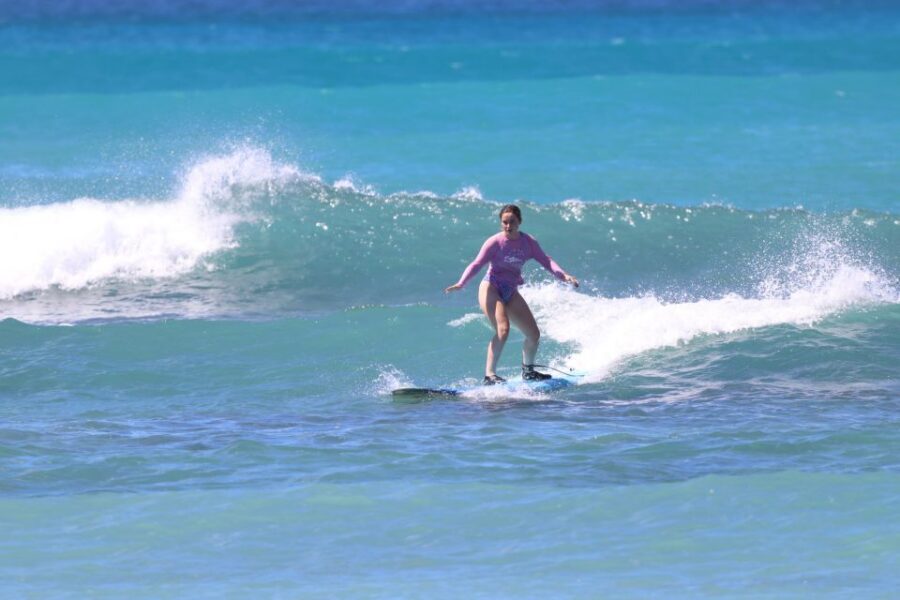
A good surf lesson feels easy in hindsight. Most of that comes from small choices you make before you even reach the beach.
Here’s what you should do:
- Arrive 20 to 30 minutes early
You’ll get checked in, geared up, and ready without stress.
- Pack sunscreen and a towel
The lesson takes place in Hawaii sun. You’ll appreciate not scrambling to find protection.
- Wear beachwear and be ready to move
You’re going to be in and out of the water and practicing physical skills. Plan for that rhythm.
- Use the included gear properly
Rash guard and reef shoes aren’t just extras. They help you feel more stable and protected.
- Tell the instructors about any limitations
Physical fitness is described as moderate, and the team expects you to communicate medical concerns.
One small “nice to know”: souvenir photos are available to purchase, but they’re not included. If photos matter to you, budget for them in advance so the end of the lesson isn’t a surprise decision.
Should You Book Waikiki Beach Surf Lessons with Hans Hedemann?
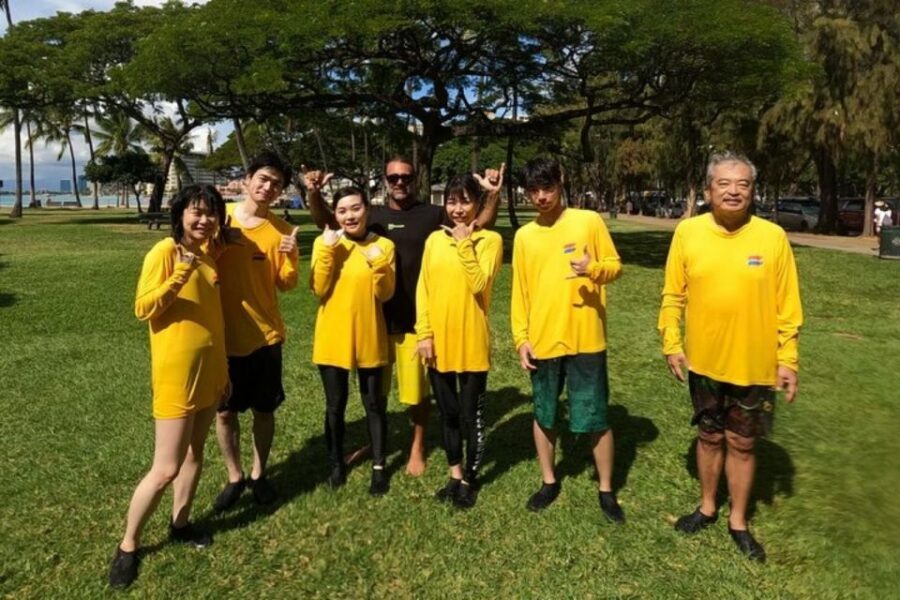
If your goal is a first surf session where you learn the real basics from certified, ISA-certified instructors and you don’t want to handle gear or planning headaches, then yes, this is worth booking. The format makes sense: 2 hours, small-group support, included equipment, and a clear focus on paddle, stand up, and ride.
I’d skip it only if you fall into the listed non-suitable categories (like non-swimmers or back problems) or if you’re not up for moderate physical effort. Surfing is fun, but it’s still a physical ocean sport.
For most beginners, this is a strong way to spend a Waikiki day: structured enough to help you learn, flexible enough to be enjoyable, and practical because you show up and the gear is handled.
FAQ
Where do I meet for the Waikiki Beach surf lesson?
Meet at Hans Hedemann Surf Shop, located inside the lobby at Queen Kapiolani Hotel at 150 Kapahulu Ave. Check in 20 to 30 minutes before your scheduled start.
How long is the lesson?
The surf lesson lasts about 2 hours.
What’s included in the price?
You get professional instruction from a certified teacher, all equipment (surfboard, rash guard, and reef shoes, including a leash), and safe storage lockers.
What should I bring with me?
Bring a towel, sunscreen, and beachwear.
Is this lesson for beginners?
Yes. It’s designed for beginners and all skill levels, with safety briefings and instruction on paddle, stand up, and riding waves. The lesson is for ages 14 and up.
Who is it not suitable for?
It’s not suitable for children under 14, pregnant women, people with back problems, or non-swimmers. You should also inform the team of any medical conditions or physical limitations.