REVIEW · HONOLULU
Waikiki: Waikiki Night Marchers Ghostly Walking Tour
Book on GetYourGuide →Operated by Mysteries of Hawaii · Bookable on GetYourGuide
Spooky stories meet sacred Waikiki ground. I especially love Lopaka Kapanui as a storyteller and the tour’s documented accounts of hauntings. One thing to plan for: it runs about 90 minutes on foot, with some grassy or uneven spots, so bring comfortable shoes and a light jacket for evening breeze.
If you want a ghost tour that feels connected to place (not just jump-scares), this one works. It’s family-friendly, guided in English, and you end right where you started at Kapiʻolani Park Bandstand.
In This Review
- Key things that make this tour worth your evening
- Meet Lopaka Kapanui at Kapiʻolani Park Bandstand
- Why the night marchers legends get taken seriously here
- Your 90-minute walk: photo stop and an evening pace that stays manageable
- What makes the storytelling feel different: spiritual, not just spooky
- Value and the real math behind $40
- Location choice: why Waikiki’s night stories work near the park
- Who should book this ghostly walking tour
- Practical tips so your evening stays comfortable
- Should you book the Waikiki Night Marchers tour?
- FAQ
- How long is the Waikiki Night Marchers Ghostly Walking Tour?
- Where do I meet for the tour?
- Is food included?
- Do I need to bring comfortable shoes?
- Is the tour wheelchair accessible?
- Is the tour English-language?
- What is the cancellation policy?
Key things that make this tour worth your evening
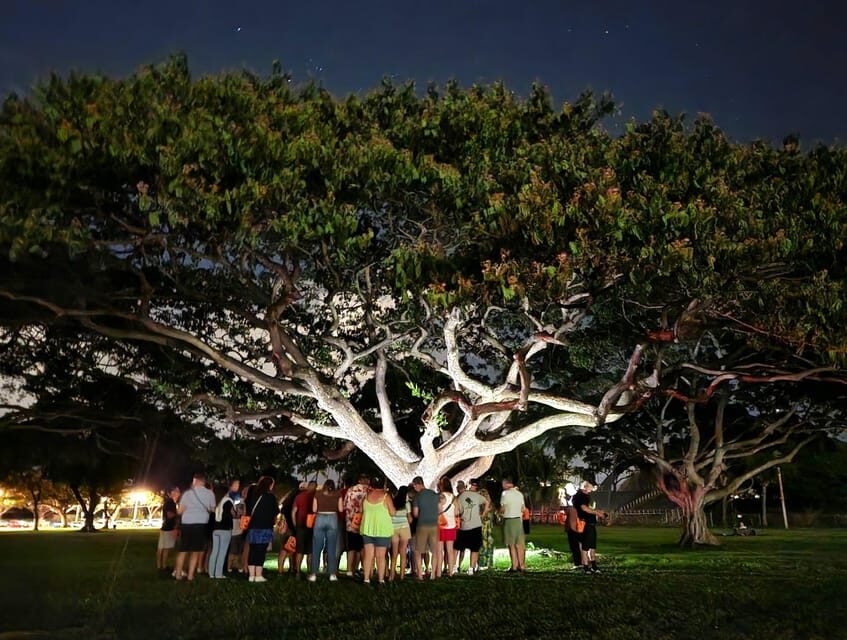
- Master storyteller Lopaka Kapanui leads the walk with a calm, narrative style that sticks.
- Award-winning by USA Today 10Best readers (2023, 2024, and 2025), so you’re signing up for something people keep recommending.
- True documented accounts of hauntings are part of the focus, not just generic spooky folklore.
- Ancient Waikiki settings show up in the stories, including references to burials and sacred heiau.
- A short walking route (around half a mile) keeps it manageable for most people.
Meet Lopaka Kapanui at Kapiʻolani Park Bandstand
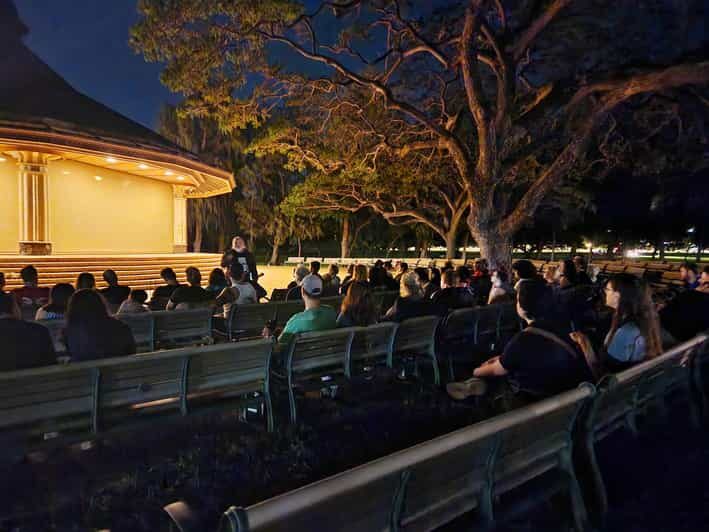
The experience starts at Kapiʻolani Park Bandstand in Waikiki. You’ll meet a Hawaiian man in a black suit, and from there the guide takes over fast—this isn’t a long wait-around kind of tour.
I like this meeting point because it’s easy to find and easy to orient yourself. Waikiki can feel like one big blur of hotels and traffic, but the bandstand acts like a clear landmark. Plus, the tour is designed as a tight loop: you’re not hunting for shuttles or trying to time buses. You’ll walk out, hear the stories in the locations that matter, and come back to the same spot.
You’ll also want to know the vibe before you go. The tour is family-friendly, and the style is more spiritual than mean. If you like your paranormal with a side of cultural context, you’re in the right place.
One more practical note: the tour is wheelchair accessible, and it’s walkable without motorized transportation. That means the pace stays human, and you’re not crossing the city in a van.
You can also read our reviews of more walking tours in Honolulu


Why the night marchers legends get taken seriously here
The big theme is the legend of the night marchers—a spectral procession you’ll hear about as the guide connects it to Waikiki’s past. The tour frames these stories in a way that feels careful: not like spooky trivia, and not like a horror movie pitch either.
You’ll hear references to Waikiki’s long timeline, including the fact that the area was once tied to ancient burials and sacred heiau, where Hawaiian chiefs reigned for centuries. That matters, because it changes how you listen. Instead of treating “haunting” as a standalone gimmick, you’re hearing it threaded through real cultural geography.
And the guide brings in something important for skeptics and believers alike: true documented accounts of hauntings and paranormal activity. The tour doesn’t ask you to ignore history or culture; it leans into documented reports while still keeping the supernatural element front and center.
If you’re the type who worries that ghost tours are mostly recycled urban legends, this is one of the reasons people rate it so highly. The stories aim to feel grounded in place—and the guide’s delivery is built around making you picture the setting, not just repeat the tale afterward.
Your 90-minute walk: photo stop and an evening pace that stays manageable
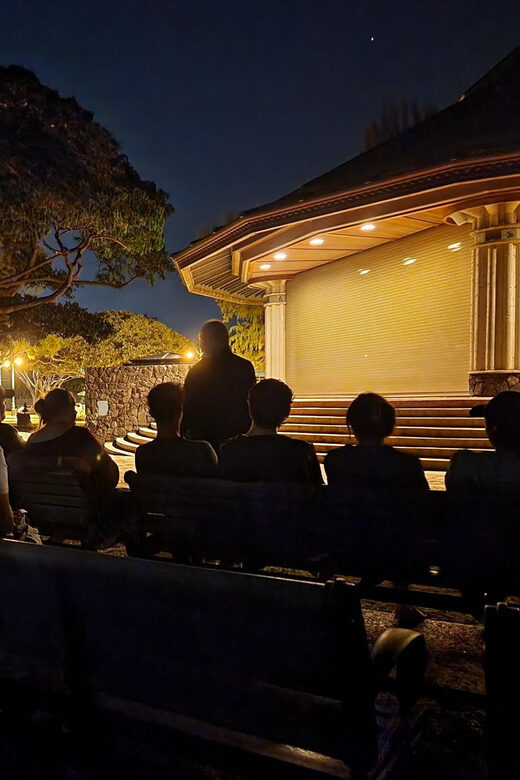
This is a 90-minute walking tour. The route is about half a mile, and you’ll include at least one viewpoint/photo stop along the way. That structure is helpful. You don’t spend the entire time zig-zagging through crowds, and you get a natural moment to pause, frame photos, and catch your bearings.
Here’s how to think about the timing. The “photo stop” moment likely functions as a rhythm point: you move, listen, then pause. That keeps the stories from feeling rushed, and it also helps if you’re traveling with a mix of energy levels in your group.
The tour also notes that you may encounter some grassy areas and that high-heeled shoes aren’t recommended. That’s a big deal in Waikiki, where people often show up in flip-flops or dressier shoes without thinking. For this tour, comfortable, supportive footwear will make the experience smoother and more enjoyable.
Good news: there’s no motorized transportation. You’re not bouncing between stops. The short route also means it’s easier to stay present. When you’re not constantly switching locations, the guide can focus on making the story land in the same pocket of space.
Cameras are welcomed, and I’d take that literally. Bring a phone or camera you can hold steady, especially at the viewpoint stop, since you’ll want to capture the look of Waikiki while the story is still fresh in your mind.
What makes the storytelling feel different: spiritual, not just spooky
Plenty of ghost tours aim for chills. This one has a different center of gravity. A standout theme from the feedback is that it feels more spiritual than other haunted walks people do in new cities. That doesn’t mean it’s soft or watered down. It means the guide treats the topic with a kind of respect and attention that shifts the tone.
You’ll also notice the way the guide talks through history and legend at the same time. One person loved how the tour preserved island history while still satisfying the supernatural-curious side. That’s exactly what you want from a top-rated ghost tour: it gives you atmosphere, but it also gives you meaning.
Another consistent praise point is the delivery. People highlight that Lopaka is strong at storytelling and explanation, and that his knowledge comes through without turning the tour into a lecture. If you like a guide who can keep the group engaged while still communicating the cultural context, you’ll likely enjoy the pacing and tone.
Also, the tour is designed so you can participate. Even when you don’t say a word, you’re not just being marched through. You’re pulled into the story. That can make the experience feel more personal, which is probably why someone even admitted they got a little nervous on the walk home afterward.
Value and the real math behind $40
At $40 per person for a 90-minute walking tour, you’re paying for two things: a premium storyteller and a tight format that keeps the experience focused.
What you’re getting:
- A guide-led experience centered on the night marchers theme
- The chance to hear documented accounts alongside Hawaiian legends and cultural references
- A format that lasts about an hour and a half, so you’re not losing half your evening to travel between stops
What you’re not getting:
- No food or drink is served, so don’t plan to combine this with dinner on the tour timeline.
- No motorized transportation, meaning you’ll want to be physically set for an easy walk and a viewpoint pause.
Is it worth it? For a lot of people, yes—because “ghost tour” pricing can be all over the map, and many tours cut corners with generic stories or low-effort scripts. Here, the price lines up with what people value: storytelling quality plus a structure that stays in one area.
Also, the fact that it’s award-recognized by USA Today 10Best readers for multiple consecutive years is a signal that this isn’t a one-season novelty. It’s a repeat recommendation.
One more value angle: if you’re staying near Waikiki’s main tourist corridor, meeting at Kapiʻolani Park Bandstand makes logistics simpler. You’re not paying extra time (or money) to reposition.
You can also read our reviews of more evening experiences in Honolulu






Location choice: why Waikiki’s night stories work near the park
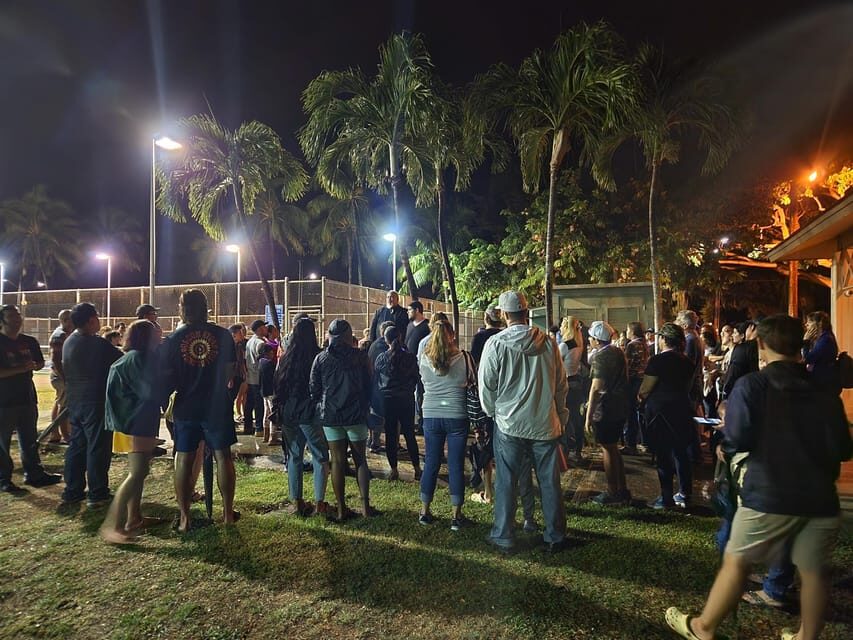
The tour is built around a Waikiki location that’s easy to reach and easy to repeat later in your trip. Starting and ending at Kapiʻolani Park Bandstand keeps the route tight and predictable.
That predictability matters if you’re visiting with family, older travelers, or anyone who doesn’t want to spend their vacation managing complex schedules. You can also plan the rest of your evening around it more confidently because you’ll return to the same landmark.
There’s another subtle benefit: this isn’t a “drive-by history” situation. Since the walking portion is short, you’re hearing the stories in the kind of physical space the guide can connect to the legends and historical references (burials, sacred heiau, and the long reign of chiefs). Even if you’re only covering about half a mile, the guide can keep your attention in a single geographic area.
And for photos, a park bandstand area gives you a natural stage. It’s not just “walk and hope.” You know there will be a viewpoint/photo moment, which helps you capture the tour while it’s happening.
Who should book this ghostly walking tour
This is a good match if you:
- Want a ghost tour that includes Hawaiian legends and history rather than only generic hauntings
- Prefer guided storytelling that feels respectful and spiritual, not purely scary-for-scary’s-sake
- Like a short, manageable walk in the middle of Waikiki
- Appreciate a guide who can explain and entertain at the same time
It’s also a smart pick if you’ve done other ghost tours and you’re chasing that next “how is this different?” feeling. The consistent praise for the guide’s ability to preserve island history while delivering supernatural tales suggests this tour has a clear identity.
If you’re hard-core into paranormal hunting with high-tech gear or long-distance trekking, this may not be your best fit, since the route is brief and the format is storytelling-focused. But if you want an evening you’ll remember because the guide connected the legend to the land, you’ll likely be happy you booked.
Practical tips so your evening stays comfortable
A few small choices can make this tour feel smooth instead of annoying.
- Wear shoes you can walk in. The route is about half a mile and may include grassy patches, so skip anything that hurts after 20 minutes.
- Bring a light jacket or sweater. The tour specifically recommends it, and Waikiki evenings can cool off more than people expect.
- Expect a short photo moment. Cameras are welcomed, so bring your phone/camera charger habitually charged.
- Plan your dinner timing. No food is served, so eat before or after rather than trying to squeeze it into the tour.
One more practical detail: you can reserve now and pay later, which is handy if your Waikiki schedule might shift. And there’s free cancellation up to 24 hours in advance for a full refund, giving you breathing room if weather or plans change.
Should you book the Waikiki Night Marchers tour?
If you want a top-rated ghost tour that mixes documented hauntings with Hawaiian cultural context, I think this is a strong choice. The storytelling under Lopaka Kapanui, the clear focus on the night marchers legend, and the short, easy route around Kapiʻolani Park make it a low-stress way to spend an evening in Waikiki.
Book it especially if you’re the type who likes paranormal stories that feel anchored to place. If you want something family-friendly, respectful, and actually worth the price, this tour earns its reputation for a reason.
FAQ
How long is the Waikiki Night Marchers Ghostly Walking Tour?
The tour lasts about 90 minutes.
Where do I meet for the tour?
You meet at the Kapiʻolani Park Bandstand in Waikiki. Look for the Hawaiian man in a black suit.
Is food included?
No. Food and drink are not served on this tour.
Do I need to bring comfortable shoes?
Yes. The tour involves about a half-mile on foot and may include grassy areas, so high-heeled shoes aren’t recommended.
Is the tour wheelchair accessible?
Yes, the tour is listed as wheelchair accessible.
Is the tour English-language?
Yes. The live tour guide speaks English.
What is the cancellation policy?
You can cancel up to 24 hours in advance for a full refund.