REVIEW · HONOLULU
Arizona Memorial & Historic Honolulu City Tour from Waikiki Area
Book on Viator →Operated by Pearl Harbor Oahu · Bookable on Viator
This is a long morning with a big emotional stop. You’ll start with Pearl Harbor’s orientation exhibits, then cross by boat to the USS Arizona Memorial, and continue on to major Honolulu sights. It’s a small-group format with Waikiki pickup, so you’re not wasting time figuring out buses and lines.
I love two things about this tour: you get the right context first (the visitor center exhibits plus a short documentary), and the day’s paced with guided narration on the city side, not just a drop-off. If you end up with a guide like Leena Bush, Jeremiah, or Jorge, you can expect strong storytelling about the monarchy and what you’re seeing from the road.
One thing to keep in mind: the schedule is tied to time-sensitive USS Arizona access, so pickup can slide earlier, and the overall day is still a solid stretch. Also, you’re dealing with strict bag rules at Pearl Harbor, so plan to travel light.
In This Review
- Key things to know before you go
- Why this Pearl Harbor plus Honolulu combo makes sense from Waikiki
- Visitor Center first: the 23-minute film and the navy boat ride
- USS Arizona Memorial: looking down at the wreckage and reading 1,177 names
- Downtown Honolulu narration: what you gain from a guided city portion
- Punchbowl Crater (National Memorial Cemetery): extinct volcano views you’ll remember
- Iolani Palace and Aliʻiōlani Hale: the only royal palace on U.S. soil
- Kawaiahaʻo Church: old worship site, and a stop for meaning
- Price and value: what $75.99 really covers
- Who this tour fits best (and who might want a different plan)
- Should you book this Arizona Memorial & Honolulu city tour?
- FAQ
- What time does the tour start, and how long is it?
- Is round-trip pickup from Waikiki included?
- Is the USS Arizona Memorial ticket included in the price?
- Are meals included?
- Are bags allowed at Pearl Harbor?
- Can I cancel for a full refund?
Key things to know before you go

- USS Arizona Memorial ticket included, plus you’ll have time at the memorial for quiet viewing
- Waikiki pickup and drop-off in an air-conditioned vehicle keeps the day easy
- Maximum 15 travelers means you’re more likely to get personal attention during narration stops
- Boat ride across Pearl Harbor is short but scenic, with calm harbor views
- Punchbowl Crater views stretch across Honolulu, Diamond Head, and the coastline
- Bag rules at Pearl Harbor (storage available for a fee) affect how you pack
Why this Pearl Harbor plus Honolulu combo makes sense from Waikiki
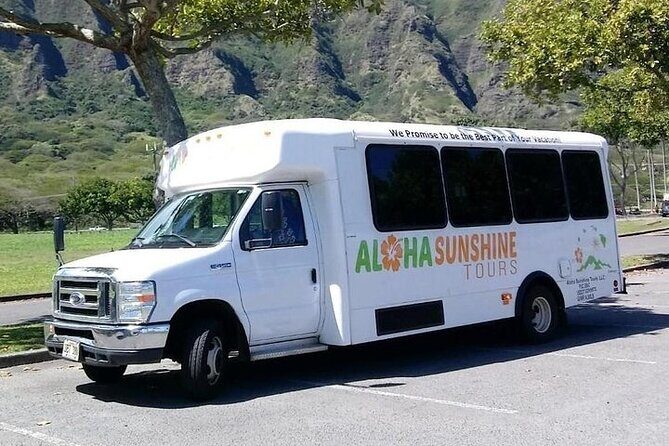
If you’re staying in Waikiki, the big question is always logistics: how do you see Pearl Harbor without turning your day into a bus-hopping endurance test? This tour is built around that reality. You get round-trip transfers and a plan that connects the solemn Pearl Harbor experience with the main Honolulu stops, so you don’t lose hours to transportation gaps.
The second reason I like this format is pace. The USS Arizona Memorial experience takes time because it’s designed for reflection, not just quick sightseeing. Then you move into city sights with guided narration, so your brain has both meaning and variety on the same day. It’s also small-group, capped at 15, which tends to keep things less hectic than larger bus tours—especially on the way back into traffic.
The early start is the trade-off. The tour begins at 7:00 am, and pickup can run up to 1.5 hours earlier than the listed time if USS Arizona passes become available. That can be fine if you’re a morning person, but if you like slow starts, you’ll want to rethink your vacation rhythm.
You can also read our reviews of more city tours in Honolulu


Visitor Center first: the 23-minute film and the navy boat ride
The day starts at the Pearl Harbor Historic Sites Visitor Center, where the goal is simple: get the timeline straight before you stand in the aftermath of Dec. 7, 1941. You’ll have time to explore exhibits that explain what led up to the attack, and then you can watch a 23-minute documentary that sets context and frames why the USS Arizona Memorial matters.
Here’s what I find practical about doing this up front: it turns the memorial from a single photo moment into a story you can follow. If you arrive already knowing the names and basic sequence of events, the memorial lands harder because your understanding is ready.
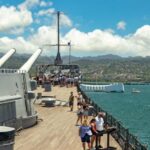
Then you board a U.S. Navy-operated boat for the short crossing to the memorial. The ride is about 10 minutes and typically feels calm, with views of surrounding military installations. It’s a brief moment where the harbor stops looking like water on a map and starts looking like a working defense zone.
Two on-the-ground tips matter here:
- Pack for security reality. At Pearl Harbor, purses and bags aren’t allowed inside, but you can store them for a fee of $7.00 each. If you travel with a bulky tote, you’ll feel this.
- Plan for comfort. You’ll be walking and standing more than you expect for a “tour,” so wear shoes that don’t punish you at hour three.
USS Arizona Memorial: looking down at the wreckage and reading 1,177 names

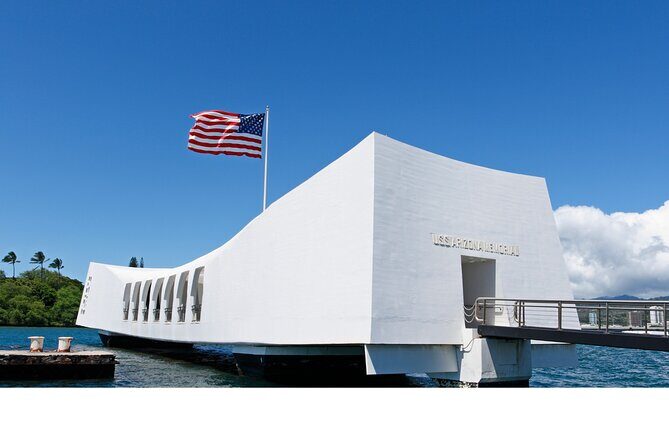
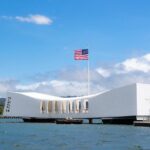
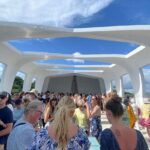
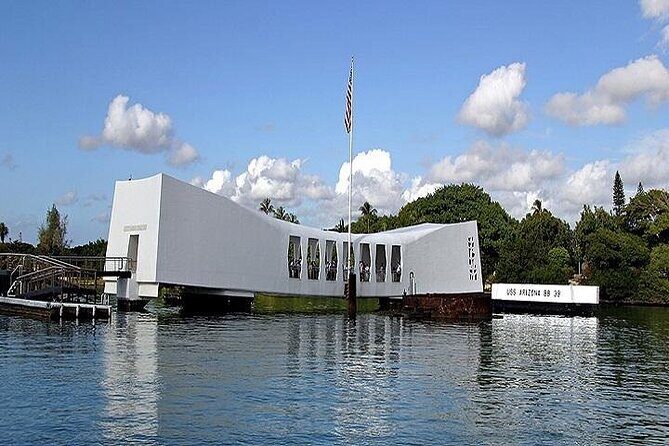
The USS Arizona Memorial is open-air and intentionally quiet. It’s a white structure spanning the remains of the sunken battleship, and the design nudges you into a slower pace. You’re encouraged to practice respectful silence, and that matters. This isn’t the kind of place where you want loud commentary or constant movement.
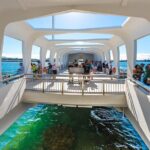
Inside, one of the most striking parts is how you can look down into the water to see parts of the wreckage just below the surface. The ship’s outline is visible, and you can still spot oil droplets rising—often called the Tears of the Arizona. Even if you’ve seen photos before, the physical scale is different when you’re there.
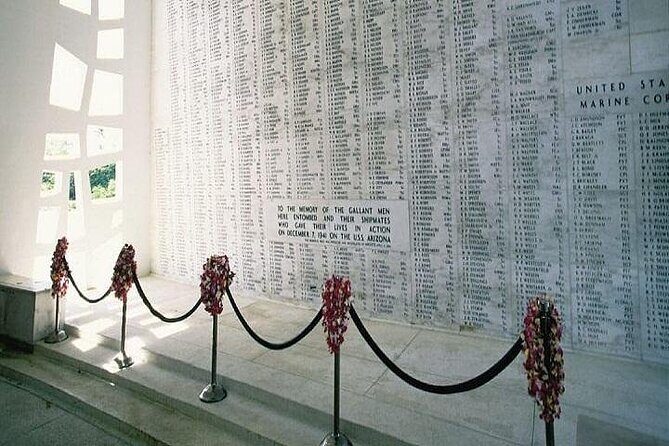
At the far end, the memorial includes a remembrance wall with the names of the 1,177 crew members who lost their lives aboard the USS Arizona. That wall changes the feel of the visit. Instead of thinking about history as a date, you’re confronted with the human cost as names you can actually read.
Time-wise, you’ll have about 1.5 hours here, which is helpful. You don’t have to rush through. You can watch the wreckage first, then settle into the wall, then take a few minutes to stand quietly where you can absorb what the site is asking you to notice.
If you want the visit to feel meaningful without being exhausting, I suggest this rhythm: arrive calm, use the first minutes to orient yourself visually (wreckage and layout), then slow down for the wall.
Downtown Honolulu narration: what you gain from a guided city portion

After Pearl Harbor, the tour shifts from memorial tone to city context. You’ll head to downtown Honolulu for a guided stop that’s about 45 minutes. The point here isn’t to “check boxes” so much as to get the threads tied together—how Hawaii’s story stretches from monarchy to modern city life.
What makes this segment useful is the narration. A good guide connects what you saw earlier with what you’re seeing now: where power sat, where decisions were made, and how the city’s geography shapes everyday life. If you’re new to Honolulu, this portion helps you get your bearings fast—and that makes the later sightseeing stops easier to understand.
You also get a change of pace after a heavy experience. You’re still on a schedule, but the focus moves toward stories, places, and explainers instead of silence and reflection. That contrast is one reason the Pearl Harbor–plus-city combination works: it doesn’t leave you stuck in one emotional mode for the entire day.
Punchbowl Crater (National Memorial Cemetery): extinct volcano views you’ll remember
Next comes the National Memorial Cemetery of the Pacific, set on top of Punchbowl Crater, an extinct volcano. This stop is quietly powerful in a different way than USS Arizona. Here, the setting is lush and carefully maintained, with rows of white headstones against green surroundings—simple, ordered, and deeply respectful.
What you shouldn’t miss is the viewpoint aspect. Because Punchbowl sits elevated, it gives you wide views over Honolulu: downtown, Diamond Head, and the coastline. That combo can feel surprising after Pearl Harbor. One moment you’re facing wartime loss; the next you’re looking at an island city that keeps living.
The practical value is that you’ll leave with a mental map of where things are in relation to one another. When you later look at Honolulu from beaches, hotels, or roads, you’ll understand the big picture more clearly.
If you’re the type who likes to photograph, do it thoughtfully here. The cemetery is a place for remembrance, and the best photos are usually the ones that respect the atmosphere—wide views, quiet corners, and the horizon.
You can also read our reviews of more historical tours in Honolulu





Iolani Palace and Aliʻiōlani Hale: the only royal palace on U.S. soil
Then you get to a very different kind of history: the Iolani Palace, described as the only royal palace in the United States. This is one of those stops that’s easy to underestimate because it’s only 15 minutes, but the story inside that short time can be huge.
Your guide will share the backdrop of Hawaii’s monarchy and tell stories about King Kalākaua and Queen Liliʻuokalani, the last reigning monarchs. Even with limited time, this is a high-impact lesson. It adds a key part of the Hawaiian timeline that many first-timers don’t know well.
From the palace area, you’ll also view the King Kamehameha Statue in front of Aliʻiōlani Hale. And your guide will talk story about the building as the original government building of the Hawaiian Kingdom. One extra detail that makes this stop feel more real: Aliʻiōlani Hale now houses the Hawaii State Supreme Court. Seeing the same space used in very different eras gives the history a living quality.
This is also a good stop if you care about cultural context. Pearl Harbor teaches you about war and loss on a specific day; Iolani Palace helps you understand the political and cultural framework that existed before that era shifted again.
Kawaiahaʻo Church: old worship site, and a stop for meaning
Another highlight on the city side is Kawaiahaʻo Church, often referred to as the Westminster Abbey of the Pacific. The key takeaway is that this is one of Hawaii’s oldest Christian places of worship, and your guide will cover its significance and role in Hawaii’s religious history.
This isn’t just a quick exterior photo stop. It’s included because it completes the cultural picture. When your day already includes monarchy stories at Iolani Palace, it makes sense to add a place tied to the later religious history of the islands.
If you like stops that give you one clear idea you can carry with you—this is the one. You’ll walk away with a better sense of how different chapters of Hawaiian life intersected and changed over time.
Price and value: what $75.99 really covers
At $75.99 per person for about 6 hours, the value comes down to what’s included versus what you’ll pay on your own.
Included:
- Waikiki pickup and drop-off in an air-conditioned vehicle
- USS Arizona Memorial admission ticket included
- Access to major sightseeing stops where some admissions are listed as free, such as downtown Honolulu time and Iolani Palace
Not included:
- Meals are at your own expense
Where you’ll want to budget extra, based on on-site rules:
- At Pearl Harbor, you may need to store bags for $7.00 each since bags and purses aren’t allowed inside.
To me, the best value part is the USS Arizona ticket inclusion. Pearl Harbor is not the kind of site where you want to manage your own timing under pressure. The tour handles the pacing so you can focus on the experience.
The other value point is the small-group set-up. With a maximum of 15 people, you’re more likely to feel like the guide’s actually talking to your group, not broadcasting to a crowd—and that matters when you’re trying to follow city history without getting lost.
Who this tour fits best (and who might want a different plan)
This is a strong choice for:
- First-timers who want Pearl Harbor + major Honolulu sights in one day
- People who like guided storytelling, especially around the Hawaiian monarchy and how places connect
- Travelers who prefer small-group touring instead of large buses
You should think twice if:
- You don’t do well with walking. The tour isn’t recommended for travelers who cannot walk about 4 city blocks
- You hate early starts. Pickup can shift earlier, and the day runs roughly 6 hours
- You want lots of free time to wander independently. This is guided and scheduled, with specific time windows at each stop
Also, do your packing math. No swimwear, no smoking, and no bags inside Pearl Harbor means your day goes smoother if you bring light layers and a plan for storage.
Should you book this Arizona Memorial & Honolulu city tour?
I’d book it if you want an organized, respectful way to see USS Arizona Memorial without turning your trip into logistics work. The day is built around context first, then the memorial’s reflection, then city sights where a guide helps you understand what you’re looking at—not just where to stand.
Skip it only if your priorities are the opposite (you want a fully independent itinerary) or if walking early-morning city blocks isn’t realistic for you. If you can handle a solid morning, you’ll come away with two kinds of clarity: the meaning of Pearl Harbor, and a stronger sense of where Honolulu’s story sits in space.
If your comfort and schedule match, this is the kind of tour that makes your time feel purposeful, not crowded.
FAQ
What time does the tour start, and how long is it?
The tour starts at 7:00 am and runs for about 6 hours.
Is round-trip pickup from Waikiki included?
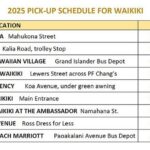
Yes. Pick-up and drop-off service in the Waikiki area is included, and you’re picked up from most major hotels.
Is the USS Arizona Memorial ticket included in the price?
Yes. The USS Arizona Memorial ticket is included.
Are meals included?
No. Meals are at your own expense.
Are bags allowed at Pearl Harbor?
No. Purses and bags are not allowed inside Pearl Harbor, but you can store bags for $7.00 each. Clear plastic bags with visible contents are allowed.
Can I cancel for a full refund?
Yes. You can cancel up to 24 hours in advance for a full refund. Canceling less than 24 hours before the experience won’t be refunded.