REVIEW · HONOLULU
History & Culture Tour in Honolulu via Segway
Book on Viator →Operated by Segway of Hawaii - Kakaako · Bookable on Viator
Segways turn downtown Honolulu into motion. You cover landmark after landmark on an efficient glide, with Segway setup plus a guide who keeps you moving through major corners of the city. Think Mission-era sites, the monarchy, courts and palaces, then all the way down to the harbor.
What I love most is the two-way radio headsets that make it easy to hear directions and story even when you’re crossing streets. The other big win is the max 8 riders format, which keeps the pace calm and makes it feel like a real conversation, not a herd.
One thing to weigh: this is $254.14 per person, and Waikiki $20 round-trip transfer is extra if you don’t already plan to start in Kakaako. If your schedule is tight or your day is weather-sensitive, that added cost can matter.
In This Review
- Key points before you go
- Why a 2.5-hour Segway tour fits Honolulu’s “show me everything” days
- Mission Houses, Kawaiahao Church, and Honolulu Hale across King Street
- The gold-encrusted Kamehameha Statue and the former seat of government
- Iolani Palace and Royal Barracks: banyan trees, the statues, and the monarchy’s end
- From Hawaii’s Capitol architecture to Chinatown’s open markets
- Bishop Street and Merchant Street: “Honolulu’s Wall Street” and early paving history
- Honolulu Harbor and Aloha Tower: coral reef area and the maritime timeline
- Kakaako Waterfront Park, Point Panic surfers, Ehime Maru Memorial, and Echo Stone
- Price value and who gets the most from this $254.14 route
- Should you book the Honolulu History & Culture Segway tour?
- FAQ
- How long is the Honolulu History & Culture Segway tour?
- Where does the tour start?
- Is the tour offered in English?
- Do you offer transfers from Waikiki?
- What’s included in the tour price?
- How many people are on the tour?
- What’s the cancellation policy?
Key points before you go
- Small group size (up to 8) keeps the ride personal and easier to manage
- Two-way radio headsets + helmet help safety and communication from start to finish
- Mission Houses, Kamehameha Statue, and Iolani Palace all land in one downtown loop
- Chinatown stops (noodle factories and open markets vibe) add texture beyond the monuments
- Harbor time for Aloha Tower plus a coral reef area brings the ocean into the story
- Kakaako Waterfront Park and Point Panic offer a modern end to the route
Why a 2.5-hour Segway tour fits Honolulu’s “show me everything” days
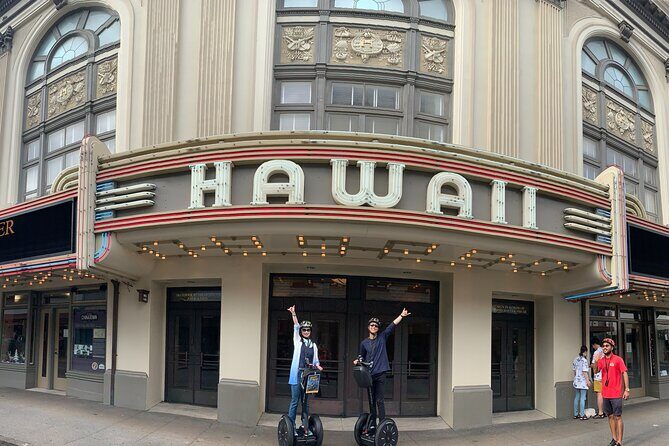
Honolulu can be a lot on foot. This tour solves that with a simple idea: use a Segway to cover distance fast, so you spend less time marching between stops and more time listening, looking, and taking photos.
You start at Segway of Hawaii in Kakaako, then glide through downtown’s most story-heavy blocks: early missionary Honolulu, the era of kings and queens, government buildings, Chinatown, and the harbor. By the end, you’re back near the water at Ala Moana Regional Beach Park, with a route that ends on scenery instead of another street grid.
The operator also sets you up for confidence. You’ll get a colorful helmet and two-way radio headset, plus bottled water. Guides such as Jeanne/Jeanie, Michael, Zach, Allen, and Tyler are repeatedly credited for making first rides feel manageable and keeping things safe. That matters, because a Segway tour is only fun when you don’t feel like you’re fighting your own balance.
You can also read our reviews of more historical tours in Honolulu



Mission Houses, Kawaiahao Church, and Honolulu Hale across King Street
The tour kicks off around the Mission Houses area, where early missionaries built structures beginning in 1820. From there, you also see the historic Kawaiahao Church and graveyard, tied to the period when Hawaiian ali’i (royalty) are memorialized in that place. It’s one of those stops where the setting helps you understand the next chapters you’ll see later.
A quick way to get value here is to pay attention to what’s in the details: the mix of buildings and the fact that this area holds both religious architecture and the memory of leaders. That makes later stops—like palaces and statues—hit harder, because you’re seeing how power, religion, and culture were interacting over time.
Then you’re looking across King Street at Honolulu Hale, Honolulu’s city hall. Even if you’re not into civic architecture, this is a smart pacing move: it connects the 1800s back to today’s government footprint.
Practical note: this first stretch is a great moment to slow down mentally. You’re about to cover a lot of famous names—getting grounded at the beginning keeps the rest of the tour from feeling like a blur.
The gold-encrusted Kamehameha Statue and the former seat of government
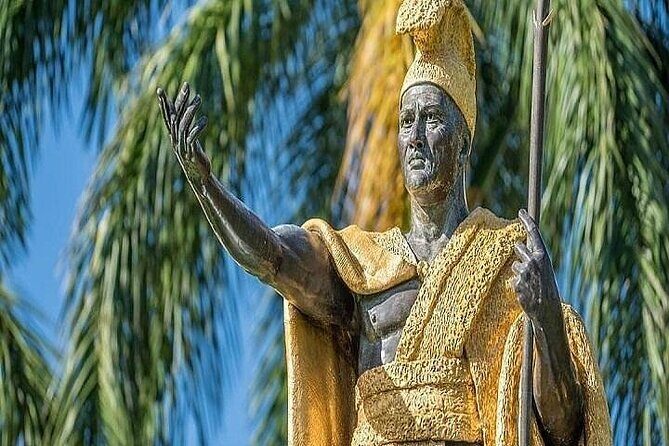
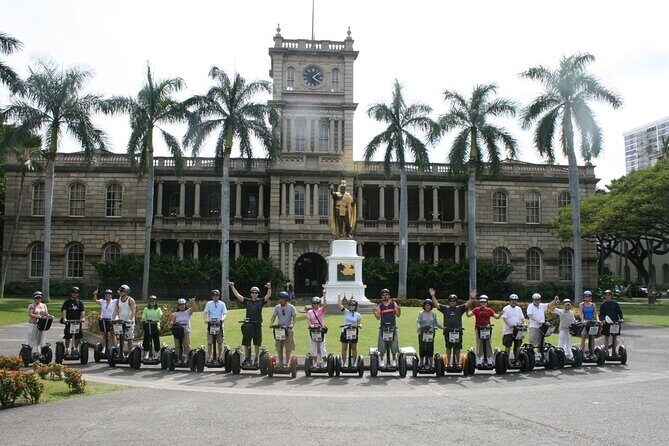
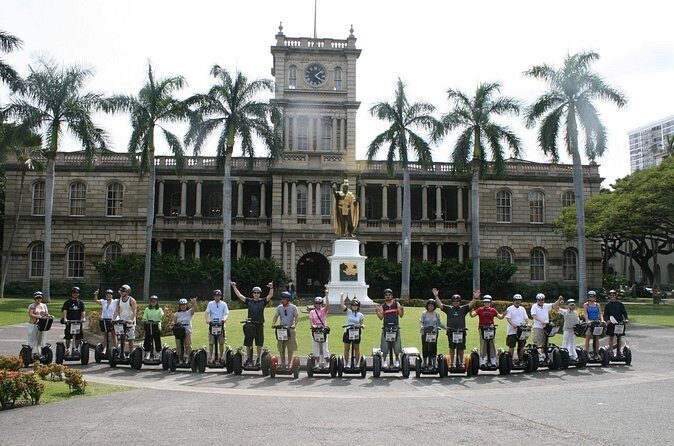
Next you glide to the Kamehameha Statue, described as gold-encrusted and one of three in the world. It stands in front of the Hawaii State Supreme Court building, a site that once served as the seat of Hawaii’s government when the islands were a nation.
This stop is powerful because it ties together three layers at once: who Kamehameha was, how the islands governed themselves, and how those institutions live on in modern architecture. It’s also a strong photo moment because the statue placement gives you a clear foreground subject with city buildings behind it.
If you’re history-focused, ask your guide to frame it the way they do on this route: not just who the person was, but what kind of authority the statue represents. That approach makes the rest of the tour—especially the palace stop—feel like a logical timeline instead of random sightseeing.
Iolani Palace and Royal Barracks: banyan trees, the statues, and the monarchy’s end
Then comes the big one: the grounds of Iolani Palace and Royal Barracks. This is described as the only palace on American soil built by King Kalakaua, and it’s now a museum. Even without turning this into a long museum day, the palace area is where you start to feel the weight of the monarchy era.
You’ll glide around the palace grounds, including time for banyan trees and a stop at the Queen Lili’uokalani statue. Lili’uokalani is noted here as Hawaii’s last ruling monarch, followed by the overthrow of her government and the Hawaiian Nation by American forces.
That historical turn is not just a fact; it’s the emotional hinge of the whole tour. The earlier sites show early contact and then nationhood. This stop explains what happened when sovereignty was challenged—and that gives context to why later monuments and civic buildings matter.
One small drawback to consider: a palace museum can easily become a half-day project on its own. This Segway route is designed to move efficiently between highlights. If you want deep reading inside exhibits, you may need extra time before or after the tour to do it justice.
From Hawaii’s Capitol architecture to Chinatown’s open markets
After Iolani, the route shifts into government-and-city mode. You pass the Hawaii State Capitol Building, highlighted for its unique architecture. It’s a nice tonal shift: after monarchy storytelling, you’re seeing how political power took on new shapes.
From there, you go along State Art Museum and Hotel Street, a route known for a colorful past. The tour then lands in Chinatown, at a Chinatown shopping mall area with noodle factories and open markets, plus a mix of people from different places. This is where the city feels lived-in rather than staged.
Two ways to make this section worth your time:
- Keep your eyes up for street layout and architecture while you’re gliding through the blocks.
- Use the market vibe as a contrast check: you’ve just been talking monarchy and courts, and now you’re seeing daily life and commerce.
The only thing to watch is pace. Market areas can tempt you to linger, but the tour is built as a moving route. If you crave shopping time, plan to come back after the tour using what you discover here.





Bishop Street and Merchant Street: “Honolulu’s Wall Street” and early paving history
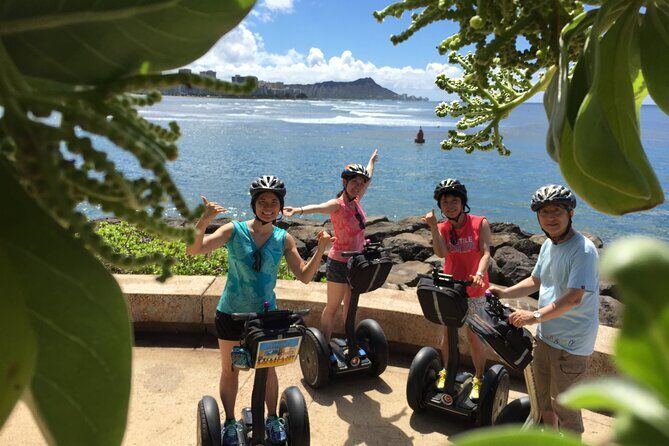
Next you head to Bishop Street, described as Honolulu’s Wall Street, then to Merchant Street, noted as the first paved street in Honolulu. These blocks give you a sense of how the city’s economy and transportation grew, and the tour points out historic transportation buildings that are more than 150 years old.
This is a stop that rewards people who like urban development stories. Instead of only focusing on major monuments, you’re seeing the scaffolding of the city: trade, movement, and the infrastructure that made commerce work.
If you’re short on time, this section is also smart because it fills the gap between “big history sites” and what the streets actually feel like. You come away with a clearer sense of why Chinatown and Harbor mattered so much to Honolulu.
Honolulu Harbor and Aloha Tower: coral reef area and the maritime timeline
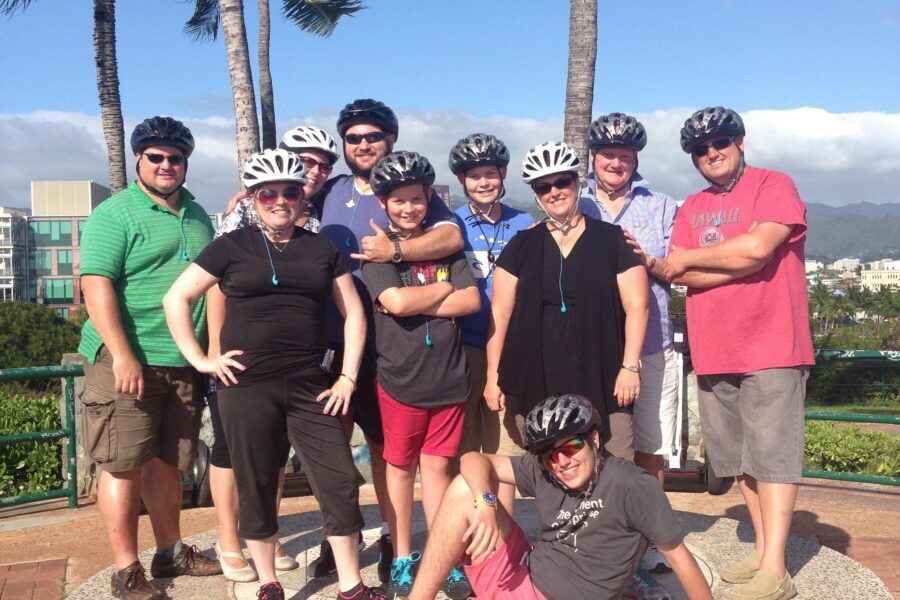
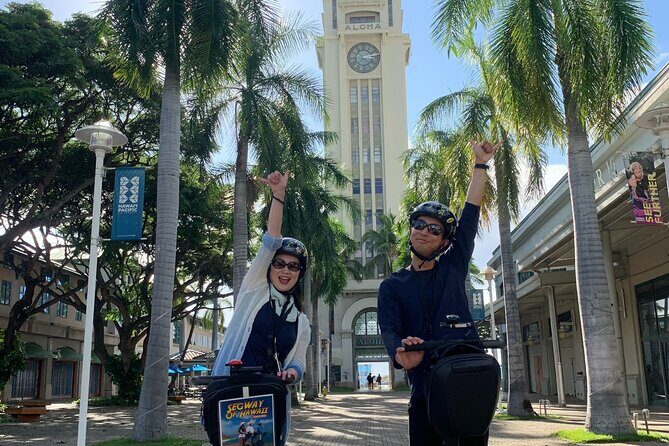
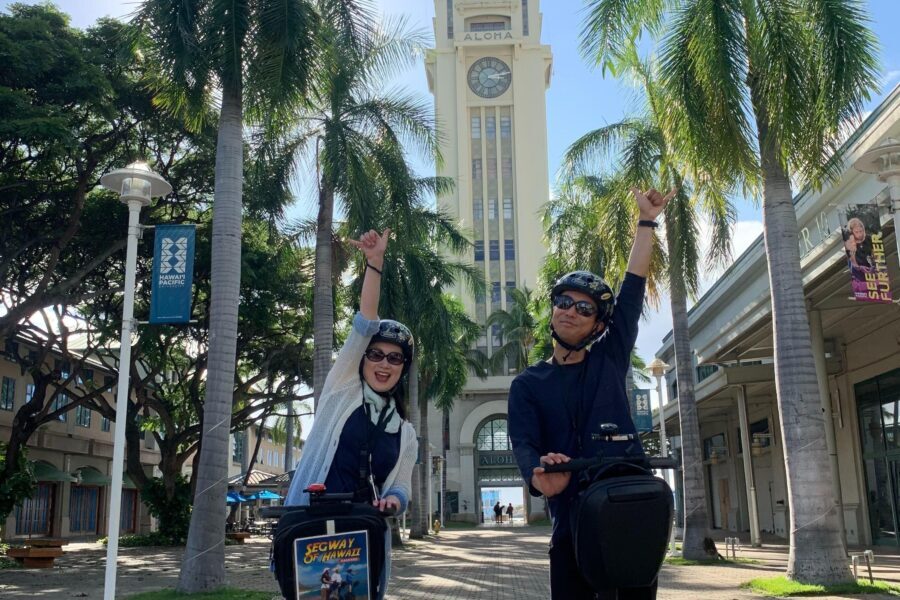
Then you head toward Honolulu Harbor and the famed Aloha Tower. The tower is described as built in 1926 and once the tallest building in Hawaii. Harbor time is a different kind of history lesson: it’s not courts and palaces anymore, it’s ships, trade, and the ocean as a central character.
You also get a stop for the restored coral reef and the fish that come to feed close by. That small nature moment adds balance after a string of political and architectural landmarks.
This is a great portion of the tour for people who like variety in their route. You’re mixing maritime history with something you can actually look at in real time. It also helps explain why the harbor area has such a strong identity in Honolulu culture.
Weather tip that matters here: harbor areas can feel more exposed than inland streets. If the day is sunny, plan for sun and salt air; if it’s windy, brace for that too.
Kakaako Waterfront Park, Point Panic surfers, Ehime Maru Memorial, and Echo Stone
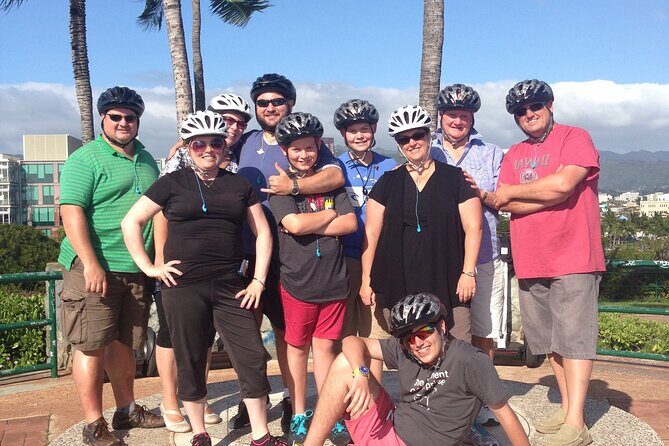
The final stretch brings you to Kaka’ako Waterfront Park and its Promenade, where you can check out surfers at Point Panic. This is a nice end-cap because it shifts from monuments to modern island life—sports, people watching, and the coastline energy.
Then the route glides up the hill to see the Ehime Maru Memorial and the Echo Stone. Memorial stops can be heavy, and that’s exactly why they’re worth including near the end: you’re not rushing through grief while still trying to understand everything earlier. By the time you reach this, you’ll be better set up to absorb the meaning without feeling lost.
Finally, you head back toward the ocean at Ala Moana Regional Beach Park for a scenic finish along the shoreline. It’s a good way to end a Segway tour because you leave with views, not just streets.
Price value and who gets the most from this $254.14 route
At $254.14 per person for about 2 hours 30 minutes, you’re paying for speed, safety setup, and a tight downtown-to-harbor route. The value isn’t only that you’re on a Segway. It’s that you’re connecting many high-impact sites that would take most people a long time to piece together on foot or by taxi.
What’s included helps justify the cost:
- Bottled water
- Helmet
- Two-way radio headset
- A guide who keeps the story flowing while you ride
What can change the math for you: a Waikiki transfer costs $20 per person round-trip. If you’re already in or near Kakaako, you may save money by skipping the transfer. If you’re starting from Waikiki and you need that convenience, the total day cost rises fast—so I’d consider whether this is worth adding on top of other Oahu activities.
Also remember gratuity isn’t included. If you tend to tip generously, factor that in so there are no surprises at the end.
Who this tour suits best:
- History buffs who want an active way to cover a lot fast
- First-time Segway riders who want coaching and clear communication
- People who like photo stops but do not want to spend hours walking between them
If you want only museum time and long indoor exhibits, you might feel rushed. This route is built for motion and highlights, not for staying deep inside every site.
Should you book the Honolulu History & Culture Segway tour?
I’d book this if you want a high-utility morning: major landmarks in a logical flow, clear guide communication, and a finish that still feels like you got out to the ocean. The small group size and the two-way headset setup are the big reasons this works.
I’d skip or rethink if your priorities are slow-paced museum wandering or if your schedule can’t handle the requirement for good weather. Also, if your starting point is Waikiki and you’d rather not pay extra for transfers, make sure you know how you’ll get to the Kakaako meeting spot.
If you’re planning a short Honolulu visit and you like the idea of learning while you glide, this is one of those tours that makes your day feel efficiently full without feeling like a checklist.
FAQ
How long is the Honolulu History & Culture Segway tour?
It runs for about 2 hours 30 minutes.
Where does the tour start?
It starts at Segway of Hawaii – Kaka’ako StoreKeeer Building, 1687 Kalauokalani Way, Honolulu, HI 96814. The start time is 9:00 am.
Is the tour offered in English?
Yes, it’s offered in English.
Do you offer transfers from Waikiki?
Yes. There are four pickup locations in Waikiki. Round-trip transfer from Waikiki to Kaka’ako costs $20 per person.
What’s included in the tour price?
Bottled water is included, along with a helmet and a two-way radio headset for communication with the guide.
How many people are on the tour?
The tour has a maximum of 8 people.
What’s the cancellation policy?
You can cancel for a full refund up to 24 hours before the experience starts. If you cancel less than 24 hours before, the amount you paid is not refunded.