REVIEW · HONOLULU
Honolulu: Historic Downtown Segway Tour
Book on GetYourGuide →Operated by Sidewalk Surfing Tours · Bookable on GetYourGuide
Downtown Honolulu feels different on a Segway. This 2-hour guided ride mixes historic landmarks with street-level views you’d otherwise walk past, plus an easy start that helps you get comfortable fast. You spend your time where photos actually happen, from royal-era sites to the murals of Kaka’ako.
The main thing to consider is that this is a Segway-focused tour: it is not ideal if you have mobility limitations or if you’re pregnant. Also, you’ll want to dress for sun and stay alert around intersections and sidewalks while you get used to the controls.
In This Review
- Key highlights worth your time
- Why a 2-hour Segway loop works for Honolulu downtown
- Starting line at Kewalos Basin Park: where you get set up
- Kaka’ako murals to Mission Houses: the downtown storytelling starts early
- Royal-era landmarks: Ali’iolani Hale, Iolani Palace, and the State Capitol
- Chinatown, Hawaii Theater, Aloha Tower, then Ala Moana Beach
- Price and what you get for $155 per person
- Who this tour fits best (and what to bring)
- Should you book the Honolulu Historic Downtown Segway Tour?
- FAQ
- Where do I meet for the Honolulu Historic Downtown Segway Tour?
- How long is the Segway tour?
- What’s included in the price?
- What languages are available for the live guide?
- What should I bring?
- Is the tour suitable for everyone?
Key highlights worth your time

- Small-group attention (max 7) means more time learning and smoother pacing through downtown.
- Safety briefing + practice session helps first-timers get confident quickly.
- Royal and government landmarks on one route: Ali’iolani Hale, Iolani Palace, and the State Capitol.
- Street art and photos: the Kaka’ako wall murals plus guided picture stops.
- Chinatown and theater district sights with stops like the Hawaii Theater and Aloha Tower.
- Ending with an Ala Moana Beach glide for an easy change of scenery.
Why a 2-hour Segway loop works for Honolulu downtown
Honolulu’s downtown can feel like two different cities: quick, polished blocks near the state buildings, then suddenly you’re in neighborhoods with older architecture, signage in multiple languages, and wall art that turns a sidewalk into a gallery. This tour is built to stitch those pieces together without wasting your whole day on transfers or long straight walks.
A big reason I like this format is the time balance. You get a full sampling of major sights—Mission Houses, Kawaiahao Church, Ali’iolani Hale, Iolani Palace, the State Capitol, the Vietnam/Korean War Memorial, Chinatown, the Hawaii Theater, and Aloha Tower—without it turning into a marathon. Two hours also means you can keep the rest of your day open for beach time, a food crawl, or shopping.
The Segway part matters too. You’re moving at a pace that feels like sightseeing, not transit. You can glance, stop, and reorient without losing your place the way you might on a slow walking tour. And because it’s guided, you’re not stuck figuring out the best angle for each landmark or wondering where the route goes next.
One practical note: you’ll be on sidewalks, so you do need a basic level of comfort around foot traffic. If you like guided structure and you’re okay learning a new riding style, this is a very efficient way to see downtown Honolulu.
You can also read our reviews of more historical tours in Honolulu



Starting line at Kewalos Basin Park: where you get set up
Your morning (or afternoon) starts near the pier area at Kewalos Basin Park. You’ll meet next to the food trucks and the Makani Cataraman tour counter, by the large letter sign that says Food Trucks. The practice part happens in the parking lot—this is where the tour stops being a sightseeing plan and becomes a real riding lesson.
Before you roll into the city, you’ll get a safety briefing and a helmet. You’ll also do a practice session so you learn the basics: how to balance, how turns feel, and how to slow down smoothly. This isn’t just a box-check. It’s the difference between enjoying the ride and spending your time tense.
What stands out from the guide experience is the clarity of instruction in Japanese. Many first-time riders join because they’re curious, not because they already know how a Segway behaves. The guidance is designed for that exact moment when your brain is thinking, Okay, how do I not wobble, and your feet are trying to catch up.
The other smart detail is group size. With a small group capped at 7, your guide can keep an eye on how you’re doing without rushing the whole process. That helps a lot when someone in the group is still figuring out turns, because the entire tour doesn’t need to wait until everyone is ready.
Kaka’ako murals to Mission Houses: the downtown storytelling starts early
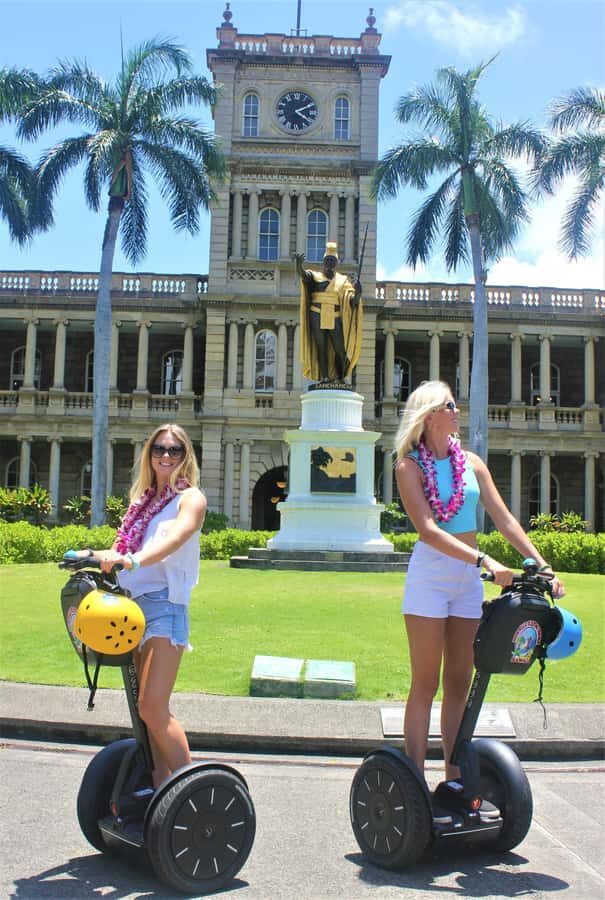
Right after you start, you glide past the wall art murals of Kaka’ako. This is one of the most fun zones to learn on, because the sidewalks give you visual cues while you find your rhythm. If you like street art, you’ll appreciate that the tour doesn’t treat murals as a quick stop-and-go. It places them early, so you get momentum before the route reaches the more formal landmark areas.
Then you head into the older, landmark-heavy part of downtown. The Mission Houses bring a sense of early Honolulu life you can’t quite get from a distant viewpoint. Nearby, Kawaiahao Church adds another layer—recognizable architecture, a calm presence, and a setting that makes your sightseeing feel less like a checklist.
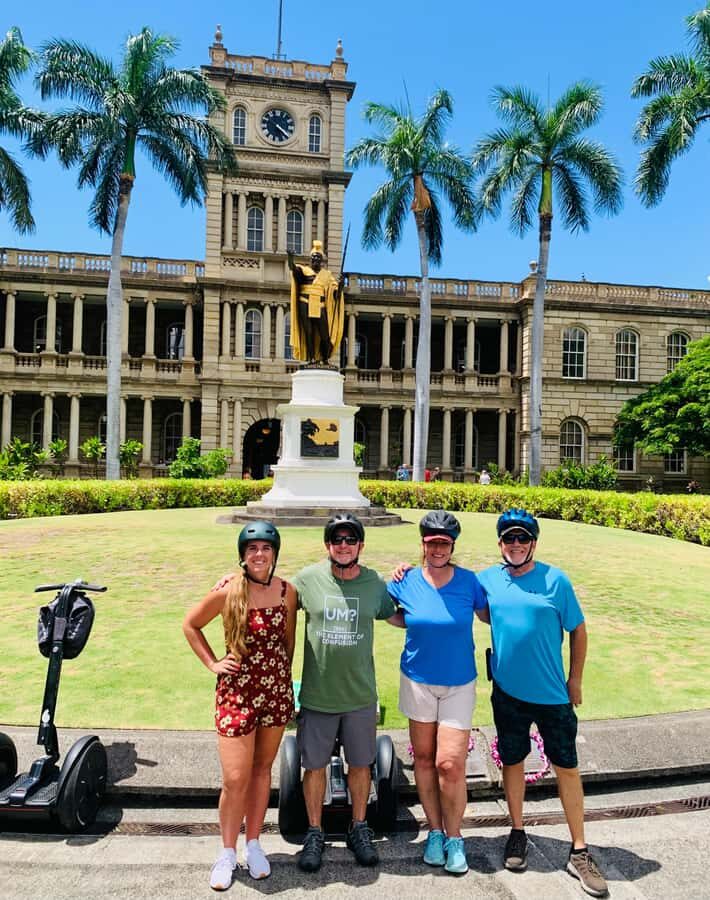
Ali’iolani Hale is next on the skyline of stops. You’re moving through a part of town where the buildings communicate governance and identity in a way that’s easy to see from street level. You also get the King Kamehameha Statue in your route. That statue isn’t just a photo op; it acts like a physical anchor for the rest of your sightseeing because it connects the modern city with the story people tell about Hawaii’s past.
A key benefit here is flow. This portion of the route stacks different types of meaning—art, faith, and heritage—without making you bounce back and forth across town. When you’re on a Segway, that matters because the ride itself becomes part of how you experience the neighborhood.
If you’re a first-timer, this early sequence is also psychologically useful. You’re not thrown straight into complex riding around busier corridors. You’re building confidence while the sights keep you engaged.
Royal-era landmarks: Ali’iolani Hale, Iolani Palace, and the State Capitol
After the first run of heritage stops, the tour shifts toward royal-era and government buildings, and that’s where the downtown feels most dramatic. You’ll pass Ali’iolani Hale again as part of the planned route, then roll through the area around Iolani Palace.
Iolani Palace is one of those places where the outside matters as much as the inside if you’re only seeing it as part of a short tour. From street level, you can pick up scale and detail quickly. On a Segway, you can slow down and look rather than walking past on autopilot.
You’ll also see the State Capitol. This is a good moment to notice how Honolulu’s civic identity is literally built into the streetscape. The tour route frames the Capitol within the same time window as palatial heritage, which helps you understand the city as a continuous story rather than separate “attractions.”
The Vietnam/Korean War Memorial is another important stop. It changes the mood of the tour, and it gives you a chance to do a more thoughtful look rather than just snapping photos. Even if you’re not an architecture or monument person, the memorial gives context—what people are commemorating, and why that matters in a place where so much attention goes to the present-day beach lifestyle.
From a rider’s perspective, these stops are also smart because they’re spaced in a way that lets you keep your control while still getting landmark time. That balance is the real value: you’re seeing a lot, but you’re not rushing.
Chinatown, Hawaii Theater, Aloha Tower, then Ala Moana Beach
Next comes Chinatown and the theater district area. This is where downtown Honolulu feels more like a living neighborhood. Chinatown gives you cultural texture through street-level details, and the route keeps you moving so you don’t feel stuck waiting for a group that’s trying to decide what direction to walk.
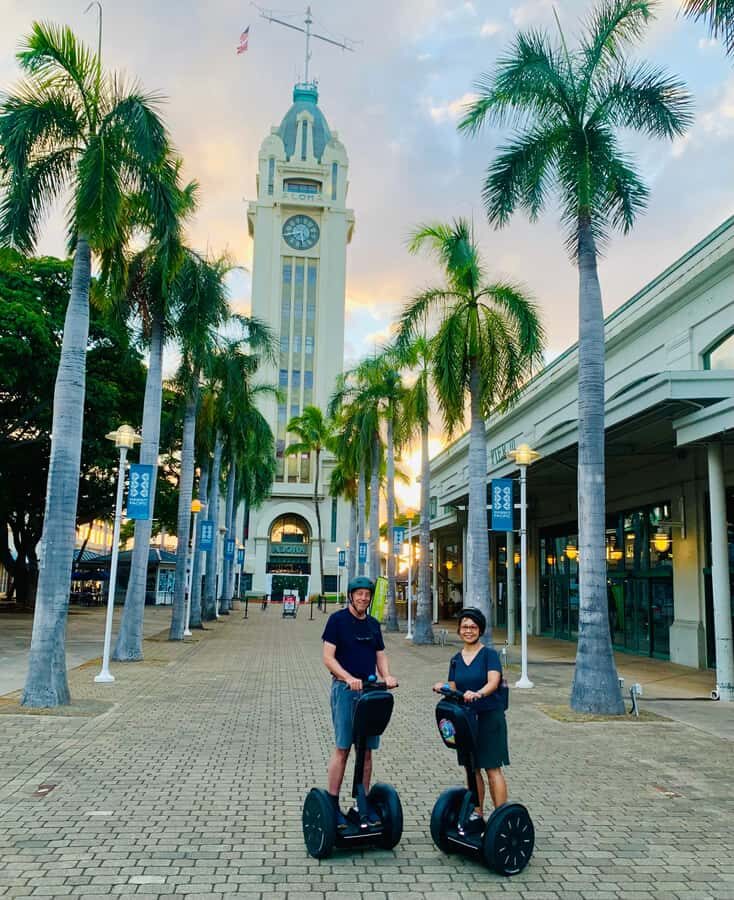
You’ll also visit the Hawaii Theater area and make time for Aloha Tower. Aloha Tower is especially useful as a contrast stop: it’s iconic and easy to recognize, and it signals you’re moving toward the waterfront feel of downtown. The tower works well for quick photos, but it also helps you orient the geography of the city.
Then the tour ends with a ride along Ala Moana Beach. This finish is not just for scenery. It’s a practical and emotional reset. After streets with buildings, signage, and steady stopping, the beach path tends to feel lighter and more open. On a Segway, the last stretch can feel like a reward: less about landmarks, more about gliding and relaxing.
This matters if you’re planning a full day in Honolulu. Many tours end after you’ve hit the most famous spots, leaving you tired and overheated. This one hands you a calmer final segment that fits naturally into the rest of your itinerary—especially if you’re headed to dinner nearby or want a final look at the ocean.





Price and what you get for $155 per person
At $155 per person for a 2-hour tour, this isn’t a budget activity. You’re paying for three things at once: a guided route through high-demand areas, Segway equipment (with helmet included), and the time investment of a practice session plus hands-on help.
Is it worth it? For me, it comes down to your style of sightseeing.
If you like to see multiple major landmarks in a short window, it’s easier to justify than paying for several separate walking tours. The route covers a lot of recognizable sites in one loop—Mission Houses, Kawaiahao Church, Ali’iolani Hale, King Kamehameha Statue, Iolani Palace, the State Capitol, the Vietnam/Korean War Memorial, Chinatown, the Hawaii Theater, Aloha Tower—and then includes the Ala Moana Beach segment. That density is the value.
If you’re the kind of traveler who already loves walking and doesn’t want to learn a new device, the price may feel steep. But if you’re open to trying something different—especially with instruction in English or Japanese—the cost starts to feel more reasonable because you’re not just paying for sights. You’re paying for a guided experience that keeps you moving and helps you feel comfortable as you go.
Group size also nudges value upward. With a maximum of 7 participants, you’re not likely to get the crowded-tour feeling where your guide can’t respond to questions. And the glowing feedback about smooth Japanese instruction and safety focus suggests that the guide quality is a real part of what you’re paying for.
Who this tour fits best (and what to bring)
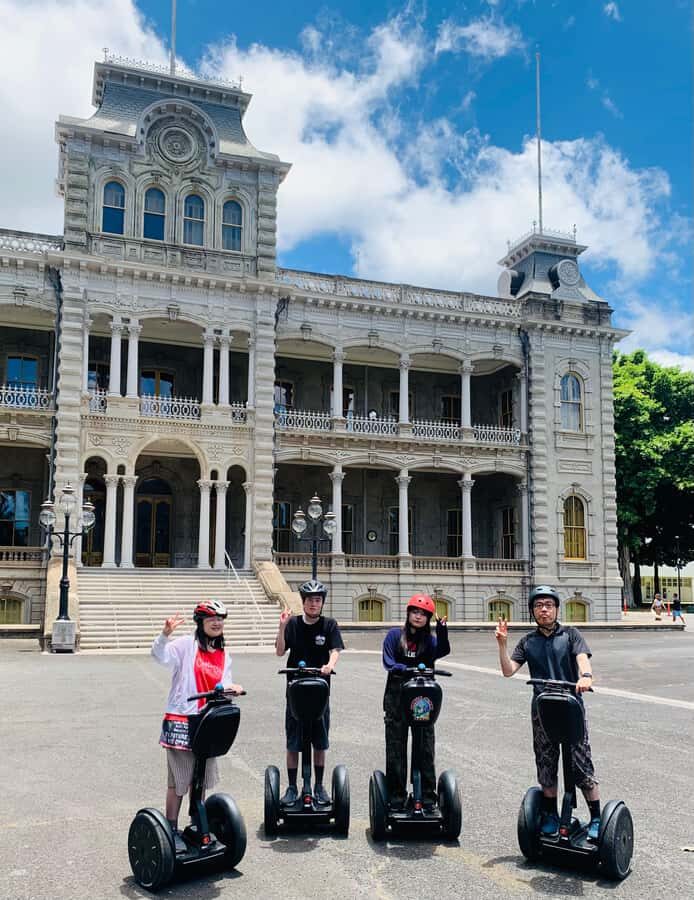
This tour is built for riders who can handle short practice, quick learning, and steady sidewalk navigation. It is not suitable for pregnant women and people with mobility impairments, so I’d treat those restrictions as firm.
It’s also a great match for:
- First-time Segway riders who want a guided start rather than trying on your own.
- Couples or small groups who want structure but prefer movement over long walking.
- Travelers who want a mix of cultural stops (church, palace, memorial) and photo-friendly street art (Kaka’ako murals).
What to bring is straightforward, but don’t skip it:
- Comfortable shoes (you’ll be standing and riding)
- Hat and sunscreen (Honolulu sun is real)
- Water (you’ll be out for the full 2 hours)
A helmet is provided, but your comfort depends on your clothing and shoes.
One more detail that’s quietly important: you’ll ride along sidewalks with ease once you’re trained. That ease comes from the initial briefing and practice session, and the guide coaching seems to be a highlight for many riders. If you’ve been worried about looking awkward on a Segway, this tour’s teaching approach is designed to fix that fast.
Should you book the Honolulu Historic Downtown Segway Tour?
Book it if you want a tight, well-paced downtown sampler where a guide handles the route and you focus on enjoying sights. The standout advantages are the instruction quality (including very fluent Japanese from guides like Timo), the small-group format, and the way the route balances major landmarks with Kaka’ako murals and an ending glide along Ala Moana Beach.
Skip or look for an alternative if you don’t feel comfortable on a Segway or if the riding style won’t work for your body. And if you’re purely a slow-wander traveler who enjoys getting lost on foot, you might find this less satisfying than a self-guided walk.
FAQ
Where do I meet for the Honolulu Historic Downtown Segway Tour?
You meet next to the food trucks and the Makani Cataraman tour counter at Kewalos Basin Park pier. There is a large letter sign that says Food Trucks.
How long is the Segway tour?
The tour lasts 2 hours.
What’s included in the price?
Included are the 2-hour guided Segway tour, a helmet, and a safety briefing plus a practice session.
What languages are available for the live guide?
The live tour guide offers English and Japanese.
What should I bring?
Bring comfortable shoes, a hat, sunscreen, and water.
Is the tour suitable for everyone?
It is not suitable for pregnant women or people with mobility impairments.